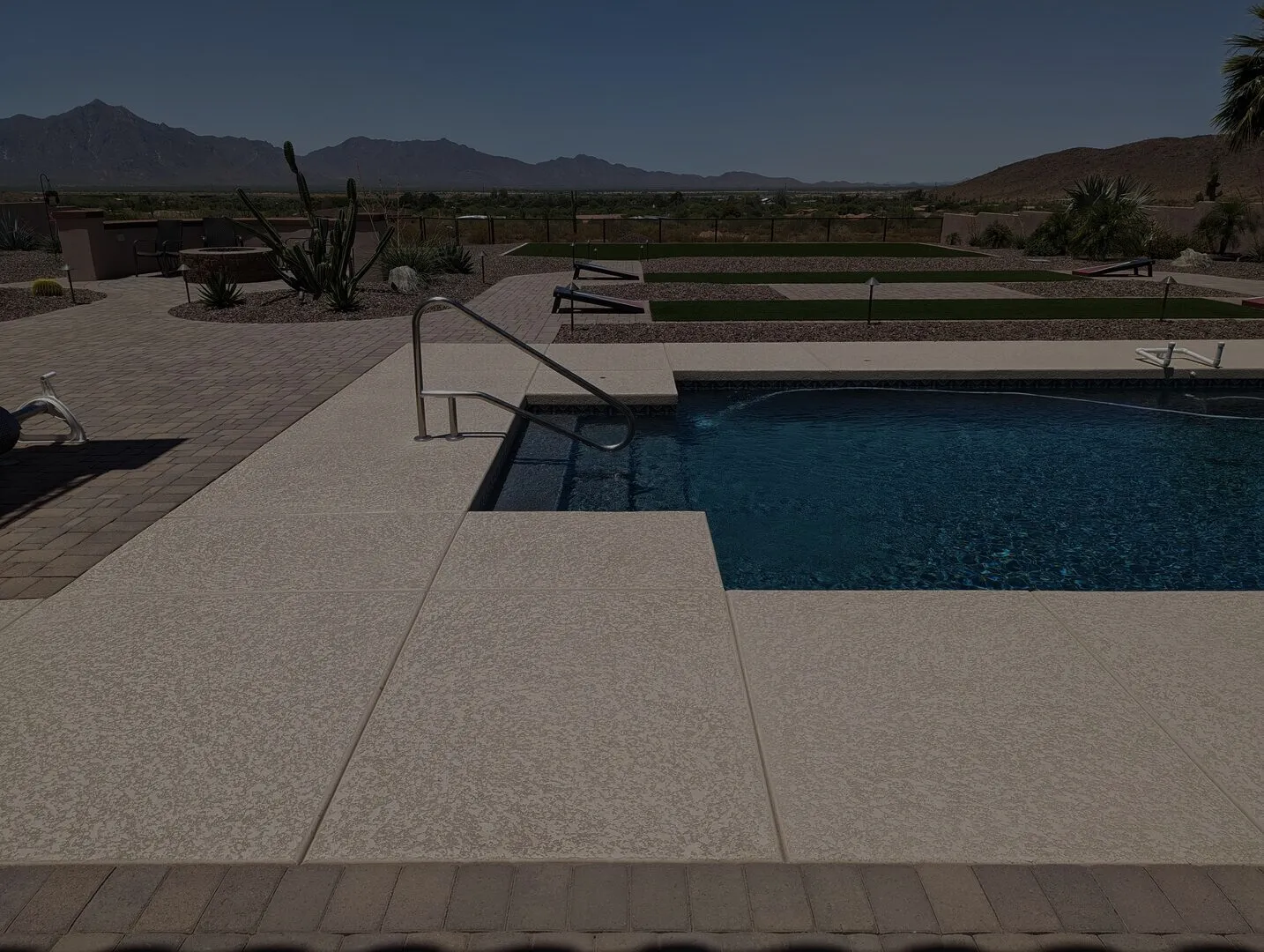



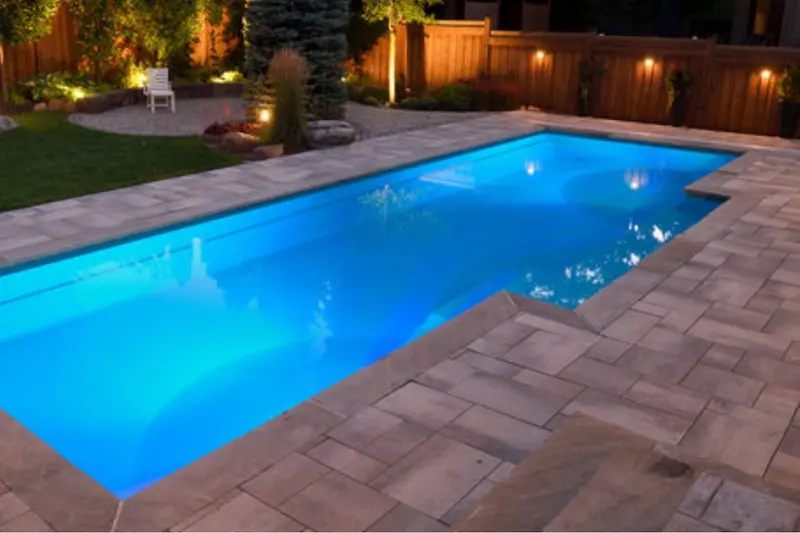
By late July in Phoenix, your pool deck has been living through 110-degree afternoons, monsoon downpours, and the kind of UV that fades a patio umbrella in a single season. That surface takes a beating most people never think about until the day someone hops out of the water and yelps because the concrete is scalding, or a hairline crack near the coping suddenly looks a lot wider than it did last spring. A pool deck rarely fails all at once. It gives you warning signs, and if you catch them early, resurfacing is usually the smart move. Catch them late, and you may be looking at a bigger job.
We have spent 12 years resurfacing decks across the Phoenix metro, and the question we get most is some version of “is this normal wear, or is my deck actually done?” It is a fair question, and the honest answer is: it depends on what is failing and why. So let’s walk through the signs that point to resurfacing, the ones that point somewhere else, and what our Arizona sun does to a deck that decks in cooler climates never have to deal with.
6 warning signs it is time to resurface
Not every flaw means you need a new surface. But when you start seeing these, the clock is running.
- Cracks you can catch a fingernail in. Fine surface hairlines are common and often cosmetic. Once a crack opens past about an eighth of an inch, water gets in, and in Arizona that water sits, heats, and works the crack wider with every temperature swing.
- Spalling. This is the flaking and chipping where the top layer of concrete lifts away and leaves rough, pitted patches. Spalling means the surface has lost its integrity, and it tends to spread.
- A chalky, faded, or porous surface. When the color has washed out and the deck feels dusty or drinks up water instead of shedding it, the old sealer and finish have given up.
- Peeling or delaminating coatings. If a previous coating is lifting in sheets or bubbling, it is no longer protecting anything underneath.
- Slick spots. A deck that gets slippery when wet has usually lost its texture, which is both a comfort problem and a real safety one around a pool.
- Heat you can’t stand on. A deck that has darkened or worn thin can get genuinely painful underfoot in summer, and that is often a coating issue you can fix.
One sign on its own might just call for a spot repair. Several of them together, especially across a wide area, is the pattern that says resurfacing rather than patching.
What Arizona heat and sun do to a pool deck
Decks here age differently than they do almost anywhere else, and it helps to understand why.
We get north of 300 days of sunshine a year, and that UV load breaks down coating binders and sealers faster than a milder climate ever would. On a July afternoon, bare gray concrete or a dark, worn cool deck can reach 130 to 140 degrees, hot enough to burn bare feet in seconds. That same heat drives constant expansion and contraction in the slab, day to night, season to season.
Then the monsoon shows up. Sudden downpours pool on any deck that no longer drains cleanly, water infiltrates the microscopic cracks, and the slab keeps flexing. Add our hard water and the mineral staining it leaves behind, and you have a surface under near-constant stress. This is exactly why cool deck coatings, which are popular here for a reason, still need attention every few years. They fade, thin out, and lose their texture under that kind of exposure. (For what it’s worth, no coating stays “cool” if it is neglected long enough. The texture is doing the work, and once it wears smooth, it heats up.)
None of this means an Arizona deck is doomed. It means the right commercial-grade system, installed properly and refreshed on a sensible schedule, matters more here than in a place that sees mild summers and real winters.
Resurfacing vs repair vs full replacement
These three get used interchangeably, and they should not be.
Repair fixes a specific, isolated problem. A single crack, one spalled corner, a small delaminated patch. If the rest of the deck is sound, repair is the right call and resurfacing the whole thing would be overkill.
Resurfacing goes over the existing slab with a new wearing surface, an overlay, or a fresh coating system. It is the answer when the surface is worn, faded, cracked in multiple places, or slick, but the concrete underneath is still structurally solid. It restores both looks and function without tearing anything out.
Replacement means removing the old slab and pouring new. That is a bigger project reserved for decks with real structural failure, and it is the exception, not the rule. Most tired decks in the Valley are resurfacing candidates, not replacements.
If you want to dig deeper into the middle of that spectrum, our breakdown on pool deck repair vs resurfacing gets into which situations call for which.
When you should NOT resurface (yet)
Here is the part most articles skip, and it is the one that saves people the most grief.
Resurfacing is a surface solution. It cannot fix what is happening underneath. If your deck has deep structural cracks, sections that have visibly settled or dropped, or damage traced back to soil movement or tree roots pushing from below, an overlay will not hold. Resurfacing over a structural crack is a short-term fix that often telegraphs the same crack back through the new surface within a year or two, and then you have paid to do the work twice.
So when should you hold off?
- When cracks are wide, deep, and running in the same direction across the slab, which can point to a foundation or soil issue rather than surface wear.
- When part of the deck has clearly sunk or heaved relative to the rest.
- When you can see or feel movement, hollow spots, or slabs that rock underfoot.
- When the damage traces back to a root system or drainage problem that has not been addressed. Resurface before you fix the cause and you are just covering it up.
In those cases the honest move is to have the underlying problem evaluated first. Sometimes that means a repair to the slab or the drainage before any new surface goes down. Sometimes, if the structure is genuinely compromised, replacement really is the better long-term choice, and we will tell you that rather than sell you an overlay that will not last. A slab that has finished settling, on the other hand, is often a great resurfacing candidate, because the “foundation” has already found where it wants to sit.
Skid resistance and safety around the pool
Worn-smooth decks are not just ugly, they are a slip hazard exactly where you least want one. Kids run, everybody is barefoot, and the surface is wet half the time.
A big part of a good resurfacing job is restoring skid resistance. The finish texture and the coating system are what give you traction when the deck is soaked, and it is one of the first things to disappear as an old surface wears down. If safety underfoot is your main worry, a proper skid-resistant pool deck coating is built to address it directly, and it is worth prioritizing over pure looks.
What a resurfacing project involves
Once we have confirmed your slab is sound, a resurfacing project is more straightforward than most homeowners expect. We assess the deck, prep the surface (prep is where lasting results are won or lost, so we do not cut it short), address any minor cracks and repairs, then install the coating or overlay system and finish it for the texture and look you want. We use only commercial-grade products, and our Certified Installers put them down the way the manufacturer intends, backed by our warranty.
The best first step is simply having someone look at it who can tell surface wear from a structural problem. That single distinction decides whether you are looking at a quick refresh or something bigger, and it is exactly what we assess on-site. When you are ready, you can see the full range of options on our pool deck renovation page, or request a free estimate and we will come take a look.
Request a Free Estimate, or call our team at 602-641-5892. We are your Phoenix, Arizona coating experts, Licensed, Bonded, and Insured (ROC317029), with 12 years keeping Valley decks cooler, safer, and built to take the heat.
Frequently asked questions
How do I know if my pool deck damage is cosmetic or structural?
Cosmetic damage lives on the surface: fading, chalkiness, fine hairline cracks, worn texture, and light spalling. Structural damage runs deeper, showing up as wide cracks in a consistent direction, sunken or heaved sections, or slabs that move underfoot. Cosmetic issues are resurfacing candidates. Structural issues need the cause addressed first. When in doubt, get it inspected before committing to any surface work.
Is a hot or slippery pool deck something that can be fixed?
Usually, yes. Both problems are typically tied to a worn or wrong surface rather than the slab itself. A resurfacing system with the right texture restores skid resistance, and a lighter, properly maintained coating stays far more comfortable underfoot than bare or darkened concrete in Arizona summers.
How often should an Arizona pool deck be resurfaced or resealed?
It depends on the system and the exposure, but our sun and monsoon cycle are hard on surfaces, so decks and coatings here generally need attention more often than in milder climates. Faded color, lost texture, or a surface that no longer sheds water are your real cues, more reliable than any fixed calendar.
Should I ever replace my pool deck instead of resurfacing it?
Sometimes. If the slab has genuine structural failure, significant settling, or damage from soil movement or roots, resurfacing will not hold and replacement is the better long-term choice. If the concrete is structurally sound, resurfacing restores it without the cost and disruption of a full tear-out.