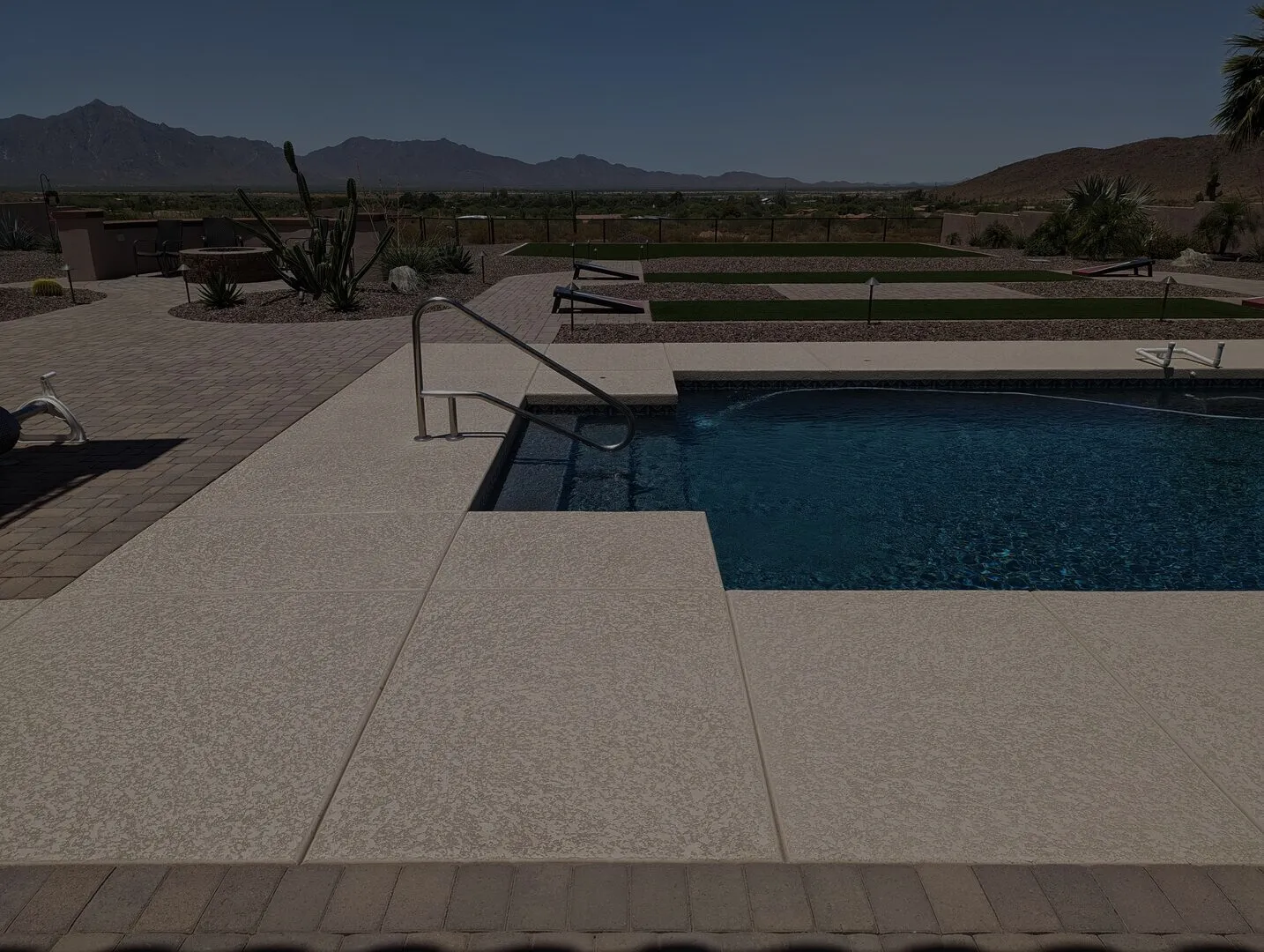



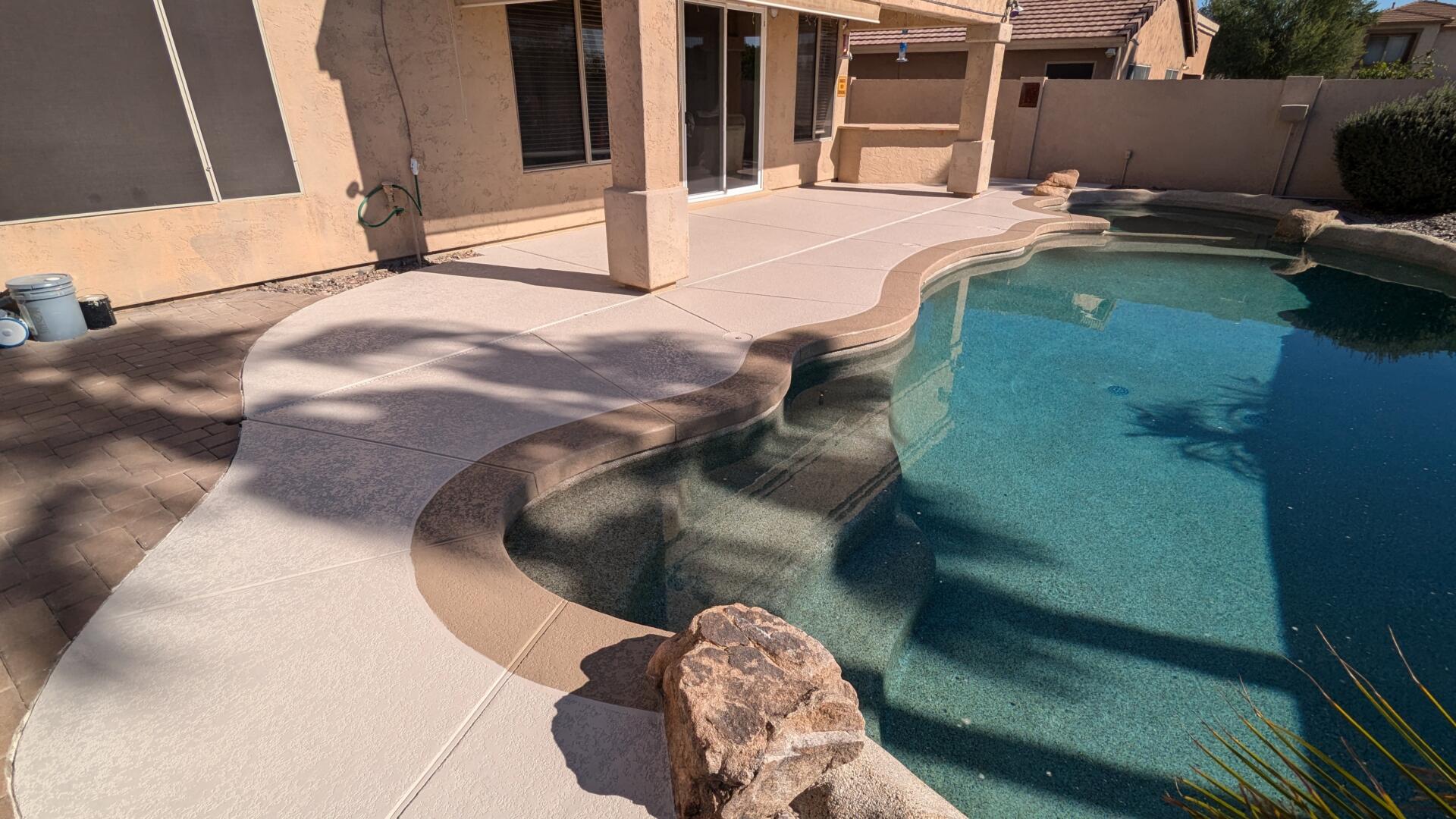
A pool deck that’s cracked, faded, or rough underfoot doesn’t automatically need a full resurfacing job. Sometimes a targeted repair solves the problem for a fraction of the cost. Other times, patching individual issues is a waste of money because the deck needs a complete overlay to actually last. Here’s how to tell which situation you’re in.
Signs of Damage: What Your Deck Is Telling You
Before deciding between repair and resurfacing, it helps to know what different damage patterns actually indicate.
Hairline cracks scattered across the deck are usually cosmetic and a sign of normal concrete curing or minor settling. They’re typically a repair-level issue, not a resurfacing trigger on their own.
Wide or spreading cracks, especially ones with a visible height difference between the two sides, suggest slab movement that may still be active. These need a closer look before any coating decision.
Spalling — flaking, pitting, or crumbling of the surface layer — often results from freeze-thaw damage or improperly finished concrete. Small, isolated spalling can sometimes be patched. Widespread spalling across the deck usually means the top layer of concrete is compromised and resurfacing is the more reliable fix.
Fading and discoloration from sun and chemical exposure is almost always cosmetic. If the slab itself is structurally sound, this is squarely a resurfacing or recoating situation rather than a repair.
Uneven or sunken sections point to settling beneath the slab. Depending on severity, this might need sub-grade work before any surface treatment makes sense at all.
Rough, worn texture that’s lost its original finish and become slippery or unattractive over years of sun and pool chemical exposure is a strong resurfacing candidate, since a new overlay restores both function and appearance in one project.
Repair vs Resurfacing: The Actual Decision
Repair makes sense when damage is isolated, cosmetic, or limited to a small percentage of the deck’s total area — a handful of cracks, a small spalled patch, or a chip near the coping. Repairs are targeted, faster, and cheaper, but they don’t address the broader condition of the deck’s surface or extend its overall life much.
Resurfacing makes sense when damage is widespread, the existing finish has degraded across most of the deck, or the deck’s appearance and slip resistance both need improvement. A resurfacing project installs a new overlay across the entire deck, which resets the surface, restores traction, and gives you the chance to upgrade color, texture, and slip resistance all at once.
A useful rule of thumb: if repairing everything wrong with the deck would mean patching more than roughly 20-30% of the surface, resurfacing usually delivers better value and a more consistent result than a patchwork of individual repairs.
Cost Factors That Shape the Decision
Several things influence whether repair or resurfacing comes out ahead on cost-per-year of useful life:
- Extent of damage — more issues scattered across the deck tips the math toward resurfacing, since labor for multiple small repairs adds up fast.
- Deck size — larger decks amplify the cost difference between a few small repairs and a full resurfacing job, so the crossover point shifts depending on square footage.
- Desired outcome — if you only want the deck functional and safe, repair may be enough. If you want a deck that also looks new and has improved slip resistance, resurfacing delivers more value per dollar.
- Long-term plans — if you’re planning to sell the home or expect to redo the deck again in a few years anyway, a lower-cost repair might make more sense than investing in a full resurface now.
- Age of the existing deck — an older deck nearing the end of its coating’s expected lifespan is often better served by resurfacing than by repeatedly patching a surface that’s going to need replacement soon regardless.
Material Options for Resurfacing
When resurfacing is the right call, there are several system types worth considering:
- Concrete overlays — a thin cementitious layer applied over the existing slab, often textured or stamped for a new look and improved traction.
- Acrylic coatings — a more affordable resurfacing option, good for cosmetic refresh and moderate durability, though less robust than overlay or epoxy systems.
- Epoxy or polyurethane deck coatings — higher-durability systems that offer strong chemical and water resistance, ideal for decks with heavy pool chemical exposure.
- Decorative knockdown or broadcast textures — resurfacing is also the moment to upgrade slip resistance and appearance together, since texture gets built into the new overlay from the start.
When to Hire a Contractor Instead of DIY
Small cosmetic crack fills are within reach for a confident DIYer. But repair-versus-resurfacing decisions themselves are worth a professional opinion, because misjudging the extent of damage leads to wasted money either way — over-repairing a deck that needed resurfacing, or over-spending on a full resurface when targeted repair would have done the job.
A contractor should be able to walk the full deck, identify which damage is cosmetic versus structural, and give you a clear recommendation with reasoning, not just a quote for the most expensive option available.
FAQ
Can I resurface a pool deck without repairing the cracks first?
No. Any structural cracks or spalling need to be addressed before an overlay is applied, or the same damage will telegraph through the new surface within a short time.
How long does deck resurfacing take compared to repair?
Targeted repairs can often be completed in a day. A full resurfacing project typically takes several days including cure time, depending on deck size and the system chosen.
Is resurfacing more expensive than repair?
Per square foot, yes, but resurfacing an entire deck is often more cost-effective than a series of repeated repairs over time, especially once damage is widespread.
Will resurfacing make my pool deck less slippery?
It can, and often should. Resurfacing is the ideal time to add slip-resistant texture, since the entire surface is being rebuilt anyway.
How do I know if my deck’s cracking is a structural issue?
Cracks with visible height differences between the two sides, cracks that have visibly widened over recent months, or multiple cracks radiating from one area are signs of possible structural movement that warrant a professional assessment before any surface work.
Not Sure Which Fix You Need? Let’s Find Out Together
Rock Star Coating Pros evaluates your deck’s actual condition before recommending repair or resurfacing, so you spend money on the fix that fits, not the one that sounds simplest. Contact us for a deck assessment.