
Rock Star Coating Pros
Commercial Epoxy Flooring: A Guide for Business Owners
See how commercial epoxy flooring works by industry, which system fits your traffic and exposure, and what to ask a commercial flooring contractor.
Commercial Epoxy Flooring: A Guide for Business Owners
Commercial floors take a different kind of abuse than residential ones. Constant foot traffic, rolling carts and pallet jacks, spills, and daily cleaning cycles all wear down a bare concrete slab faster than most business owners expect. Commercial epoxy flooring is built to handle that load while giving a space a clean, professional look that holds up between renovations. Here’s what it involves and how to know if it’s the right fit for your facility.
What Commercial Epoxy Flooring Actually Covers
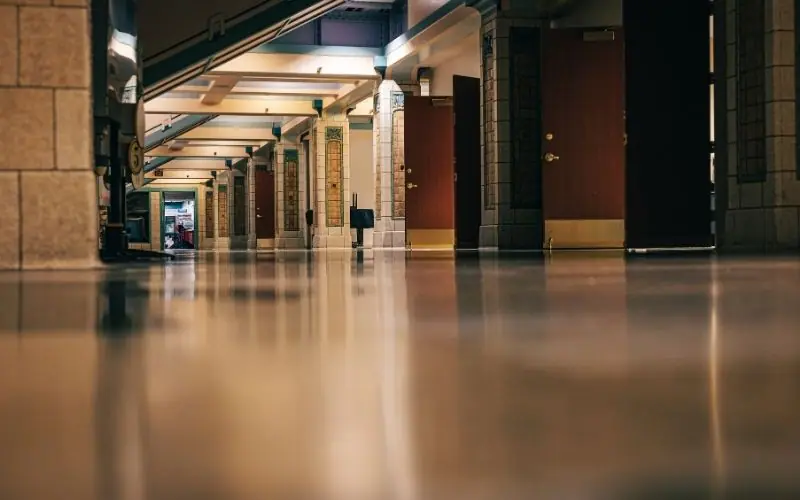
“Commercial epoxy flooring” isn’t one single product — it’s a category of resin-based flooring systems designed for business environments rather than residential garages. Commercial jobs typically call for higher-build systems, broader color and finish customization for brand or safety purposes, and installation scheduling that works around business hours rather than a homeowner’s weekend availability.
A commercial epoxy flooring contractor should be thinking about your business’s actual daily operations — traffic patterns, cleaning protocols, and downtime tolerance — not just applying a generic residential-grade product at commercial scale.
Common Commercial Use Cases
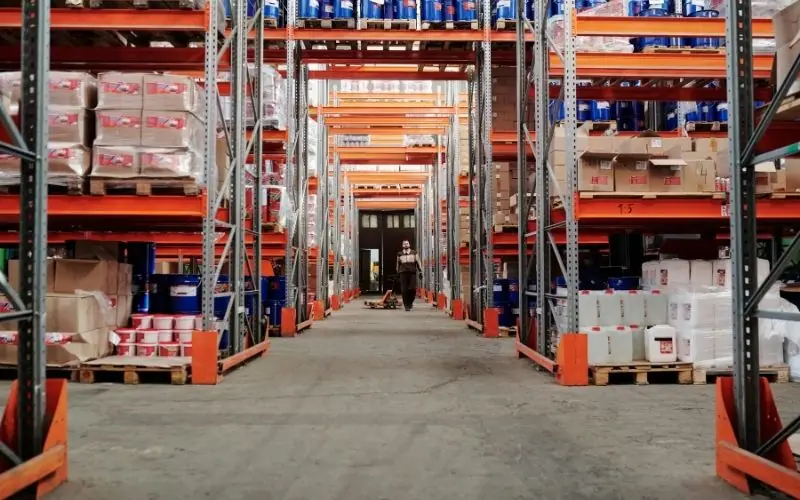
Warehouses and Distribution
Rely on epoxy for its resistance to forklift and pallet jack traffic, along with clear aisle marking that can be built directly into the coating.
Gyms and Fitness facilities
Often use textured or rubberized epoxy blends for impact absorption and slip resistance in workout areas.
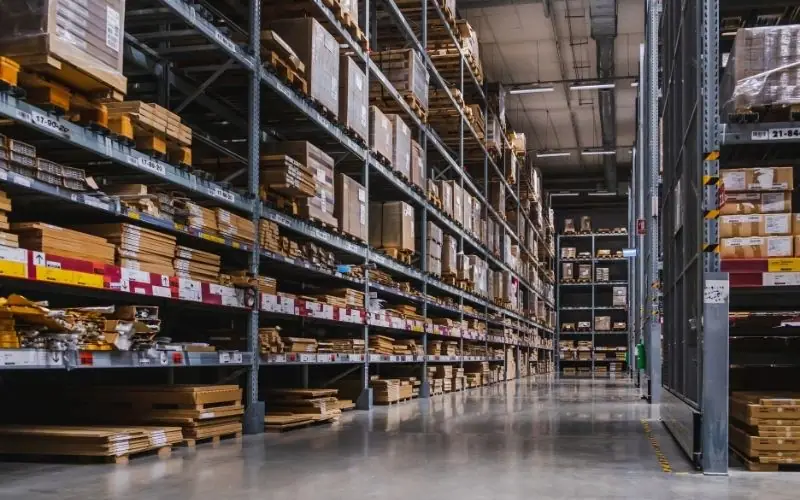
Retail spaces
Benefit from epoxy’s clean, glossy or matte finish and easy maintenance, especially in high-foot-traffic areas like showroom floors and checkout zones.
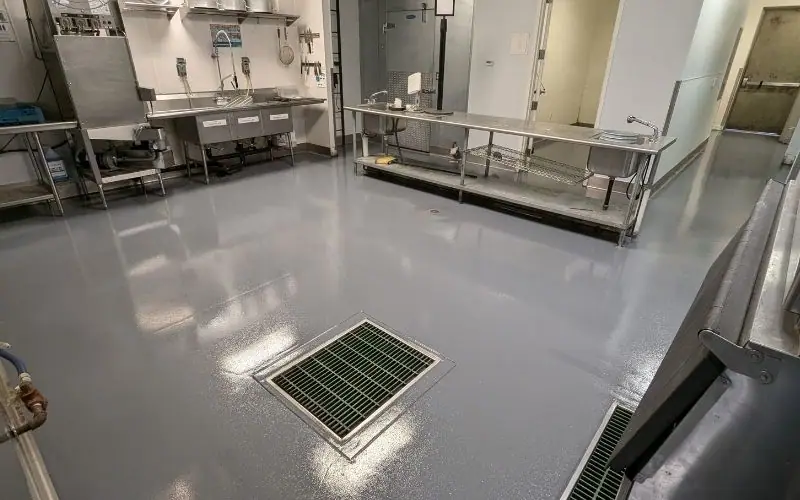
Restaurants and food service
Need epoxy systems rated for grease, frequent wash-downs, and slip resistance in kitchen and prep areas, often with seamless, coved detailing to meet sanitation standards.
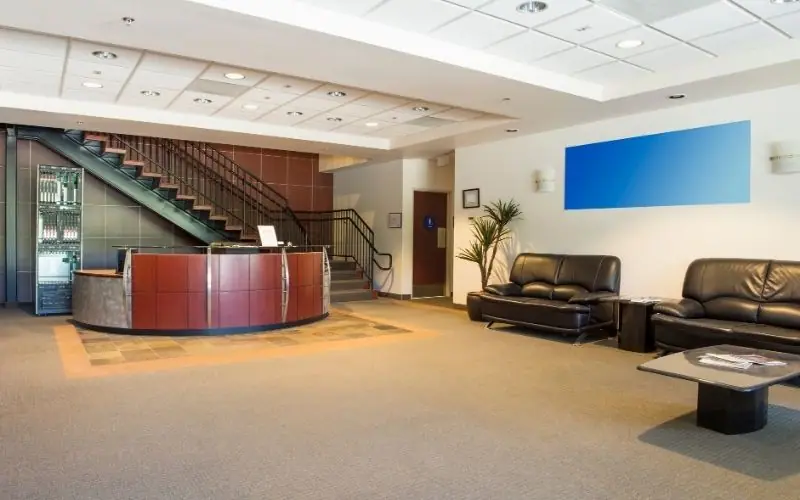
Office and Showroom spaces
Use epoxy for a polished, modern look that’s easier to maintain than tile or carpet, particularly in lobbies and high-visibility areas.
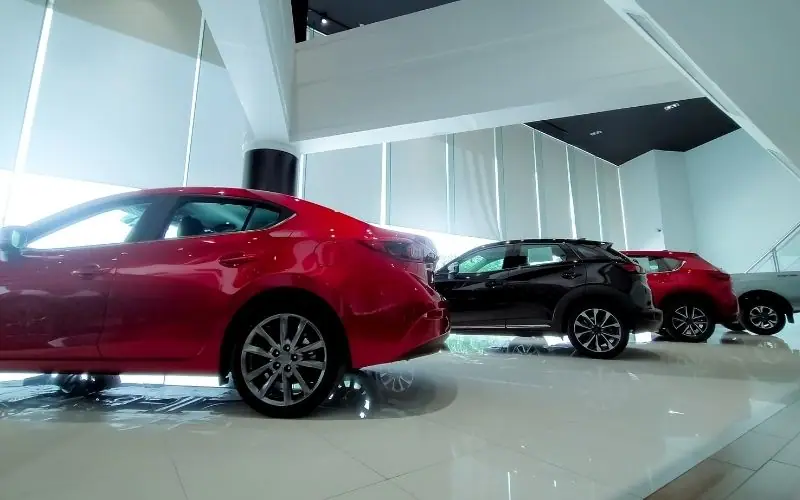
Auto Shops and Service centers
Need chemical-resistant epoxy that can handle oil, coolant, and hydraulic fluid exposure without staining or degrading.
Materials and System Types
Commercial projects typically draw from a similar palette of systems as industrial work, scaled to the traffic level of the specific space:
- Self-leveling epoxy for a smooth, seamless finish in retail and office environments.
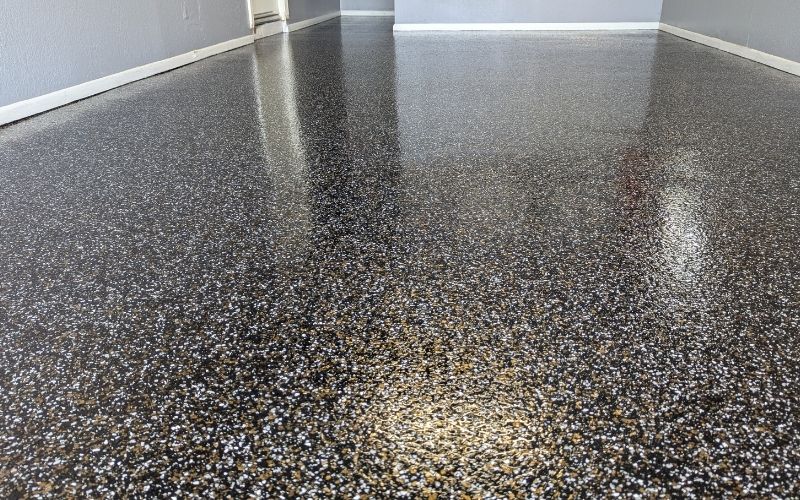
- Quartz or flake broadcast systems for a decorative, slip-resistant finish in higher-traffic or safety-conscious spaces.
- Epoxy-urethane hybrids for spaces needing both durability and UV stability, such as areas near loading docks or windows.
- Anti-microbial or seamless coved systems for food service and healthcare-adjacent spaces where sanitation matters as much as durability.
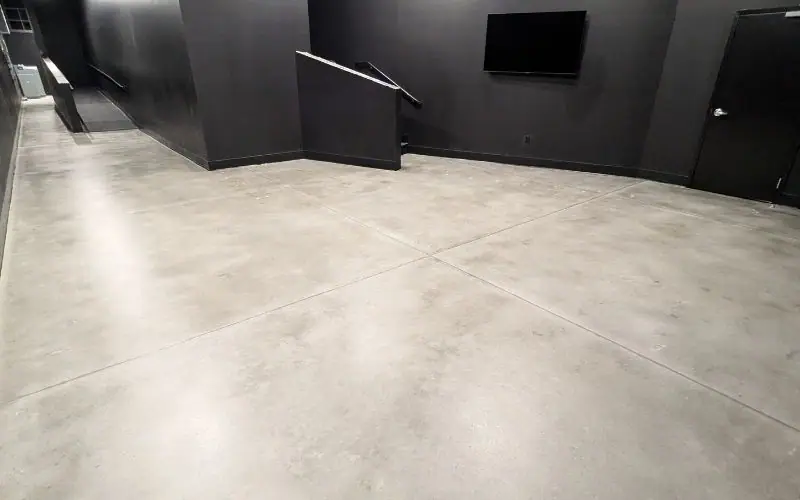
Decision Factors for Choosing a System
Choosing the right commercial epoxy system comes down to a few core questions:
- How much and what kind of traffic does the floor see daily? Foot traffic alone needs less build than forklift or rolling cart traffic.
- Is there chemical or grease exposure? Kitchens, auto shops, and manufacturing spaces need chemical-resistant formulations, not standard retail-grade epoxy.
- Does the space need to meet a safety or sanitation standard? Slip resistance ratings and seamless, coved detailing matter more in some industries than others.
- How much downtime can the business tolerate? Installation scheduling and cure time need to work around operating hours, which can affect system choice (some cure faster than others).
- Does the coating need to reflect brand identity? Custom colors, logos, or aisle markings can often be built directly into the coating during installation.
Why Commercial Epoxy Is Worth the Investment
Beyond durability, commercial epoxy flooring offers a few business-specific advantages that plain concrete or cheaper alternatives don’t:
- Lower long-term maintenance costs compared to tile, carpet, or unsealed concrete, since epoxy resists staining and is easy to clean with standard commercial cleaning equipment.
- Improved safety through slip-resistant textures and clear visual demarcation of hazard zones, walkways, or equipment areas.
- A more professional appearance for customer-facing spaces, which matters for retail, showroom, and hospitality environments where first impressions affect business.
- Compliance support for industries with sanitation or safety standards that plain concrete can’t meet on its own.
Choosing a Commercial Flooring Contractor
Not every flooring contractor is equipped for commercial-scale work. Look for a contractor who can speak specifically to:
- Experience with your industry’s traffic and exposure profile
- Scheduling flexibility around business hours and operational downtime
- Warranty terms that cover commercial-level wear, not just residential use
- The ability to recommend a system based on your specific traffic and chemical exposure, rather than pushing one default product
A contractor with real commercial project experience will ask about your operations before recommending a system, not the other way around.
FAQ
How long does commercial epoxy flooring last?
Most commercial-grade epoxy systems last 5-15 years depending on traffic volume and maintenance, with periodic topcoat refreshes extending that lifespan further in high-traffic areas.
Can commercial epoxy flooring be installed without closing the business?
Often yes, through phased installation or scheduling work during off-hours, weekends, or planned closures, though the space or section being coated needs to stay clear of traffic during application and cure.
Is commercial epoxy flooring slip-resistant?
It can be, and often should be for kitchens, warehouses, or any space with wet or chemical exposure. Slip resistance is typically built in through aggregate broadcast or textured topcoats during installation, not added afterward.
How much does commercial epoxy flooring cost?
Cost depends on square footage, system type, existing floor condition, and any custom branding or decorative elements. A site visit and quote from a contractor familiar with commercial work gives the most accurate number.
What’s the difference between commercial and industrial epoxy flooring?
Industrial systems are typically built for heavier loads, more aggressive chemical exposure, and higher-impact traffic like forklifts, while commercial systems are calibrated for foot traffic, moderate rolling loads, and appearance-focused spaces like retail and offices.
Get a Commercial Floor Built for Your Business
Rock Star Coating Pros installs commercial epoxy flooring systems matched to your industry, traffic, and schedule. Contact us for a site visit and a system recommendation built around how your business actually operates.
Get a Free QuoteTalk to a licensed coatings contractor.
License ROC317029 · Bonded and insured · Serving Phoenix, AZ and the wider Valley.