
November 11, 2026Rock Star Coating Pros
Can You Coat Over Existing Tile? An Arizona Answer
When a resin or overlay system can go over existing tile, what has to be done to the grout lines and the bond, and when removal is the cheaper decision.
Tile removal is the part of a floor project nobody wants to pay for. It is loud, dusty, slow, and it frequently damages the slab underneath, which then has to be repaired before anything new goes down. So the question comes up on almost every job with existing tile: can we just go over it?
Sometimes yes. The honest answer depends on three things that can be established in one visit, and getting them wrong produces a floor that fails in a way that is more expensive than the removal would have been.
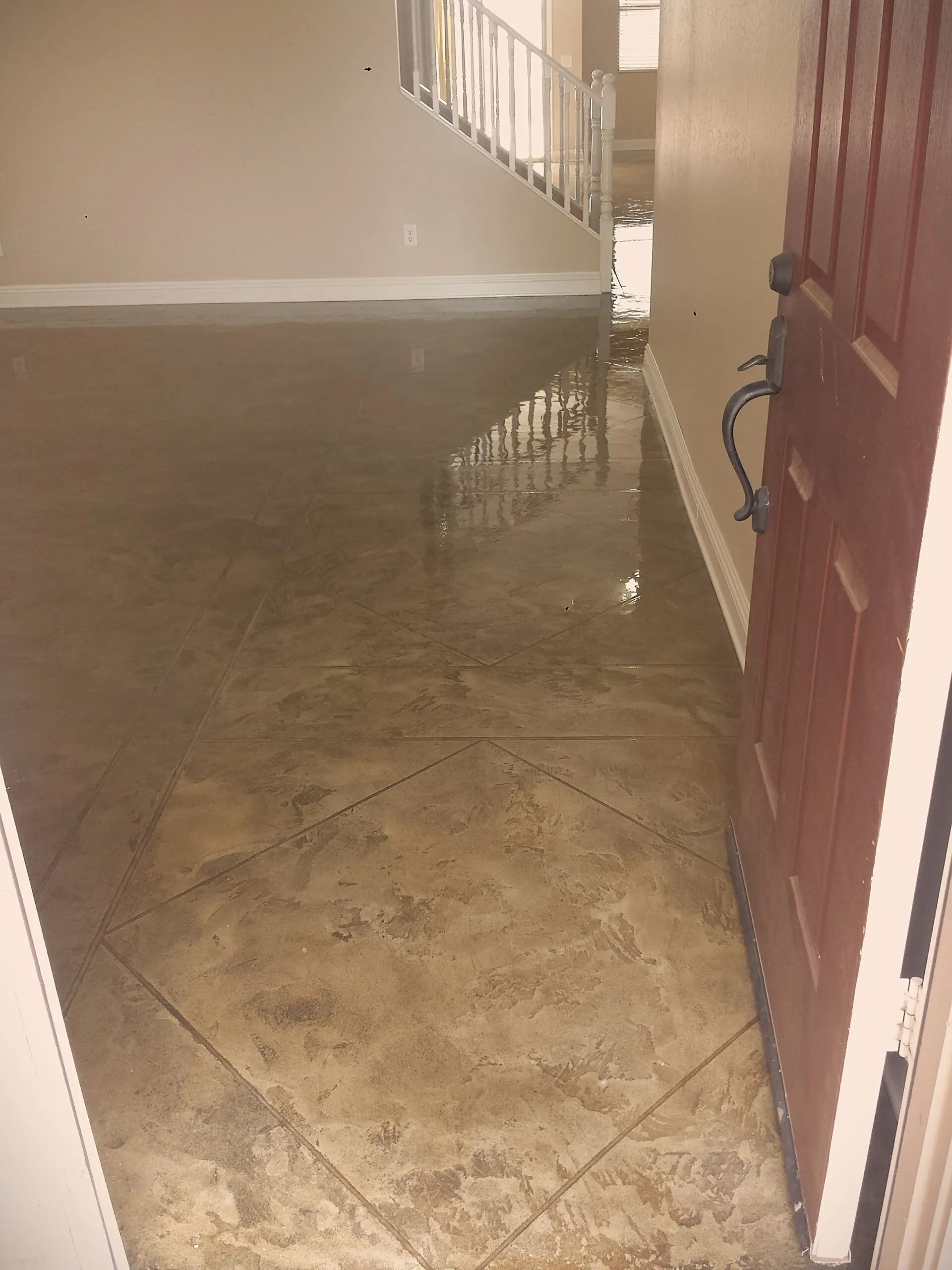
The three questions that decide it
Is the tile bonded? Every tile has to be sound and firmly attached. A floor with hollow-sounding tiles, loose tiles or tiles that have lifted at a corner is telling you the bond beneath has already failed in those places. Anything applied over the top inherits that failure. Tapping the floor across its area with a sounding tool maps it quickly, and the result is either a small number of tiles to remove and patch, or a floor that is coming out.
Is the substrate stable? Tile over a slab that is moving, cracking or passing moisture is a different problem from tile that is simply dated. Movement below reproduces itself above, through tile and through whatever goes over it.
What is the finished height allowed to be? An overlay adds thickness, and that thickness has to go somewhere. Door swings, thresholds, appliance clearances, stair risers and transitions to adjoining rooms all set a ceiling on how much can be added. This is the constraint most often discovered late.
If all three answers are favorable, going over the tile is a legitimate choice rather than a shortcut.
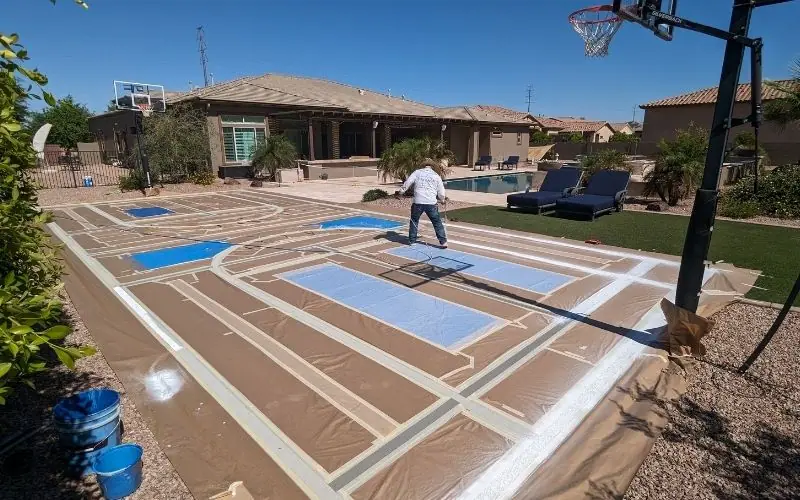
What has to happen to the tile first
Tile is designed to be non-porous and easy to clean, which is precisely the opposite of what a coating wants to bond to. Several things follow.
Mechanical profiling. The glaze has to be opened. Diamond grinding across the whole surface removes the glaze and gives a resin or cementitious system something to grip. Acid etching is not a substitute on tile, and a bonding primer alone over a glazed surface is a bet rather than a method. The general principle is covered in the importance of surface preparation in floor coating.
Cleaning and degreasing. Years of sealers, waxes, polishes and cleaning residue sit on a tile floor. All of it has to go, and some of it survives a first pass.
Grout line treatment. This is the item that decides whether the finished floor looks right. Grout lines are recesses, and a thin system laid over them telegraphs every one. They are filled and brought flush as a separate step before the finish system goes on.
Replacement of failed tiles. The hollow or loose ones come out, the cavity is filled, and the patch is brought level with the surrounding floor.
A bonding primer suited to the substrate, chosen for tile rather than for concrete.
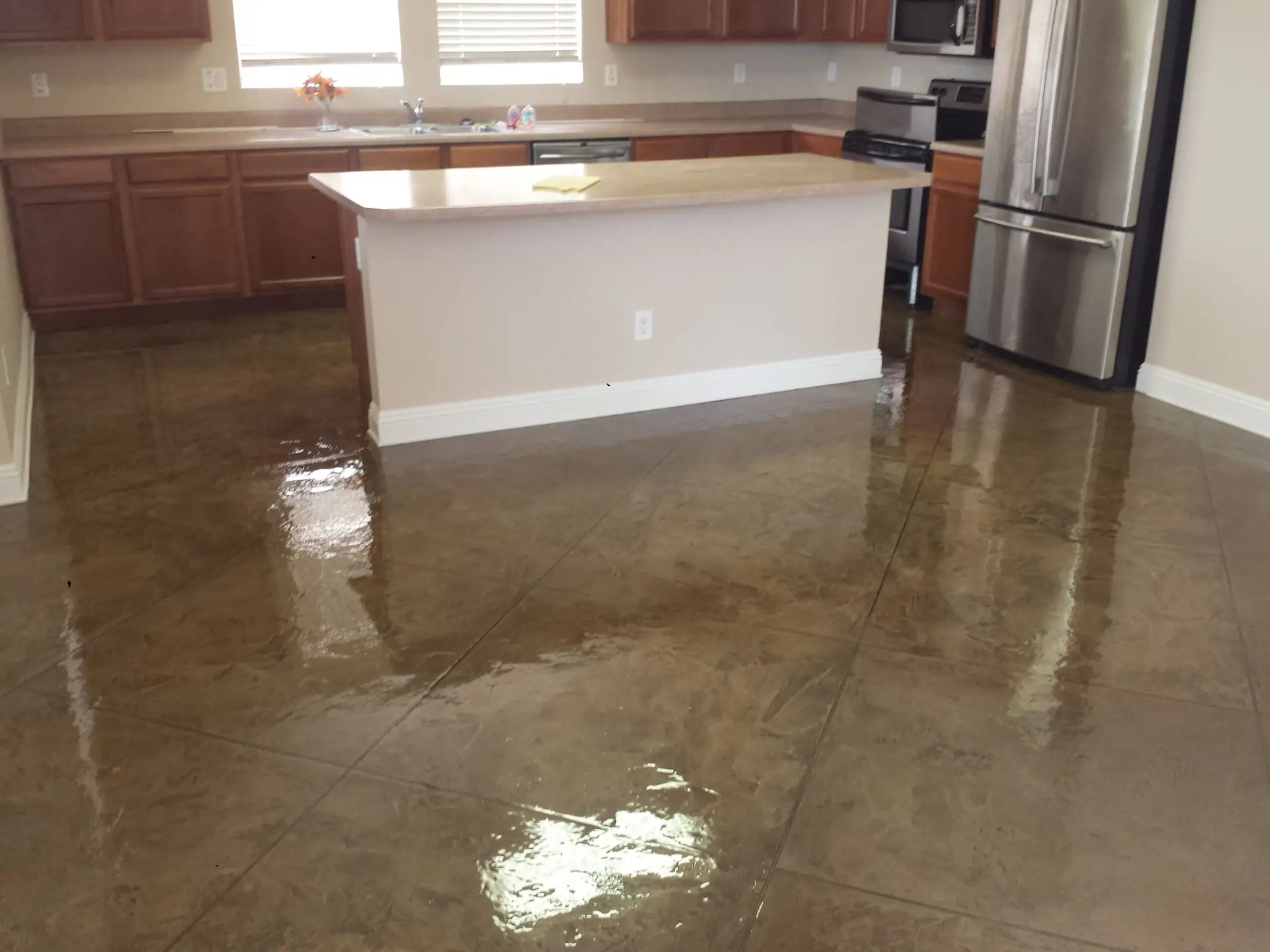
Which systems go over tile and which do not
Cementitious overlays and micro-toppings are the usual answer. They are placed at a thickness that can absorb grout line variation and produce a uniform surface, and they bond well to a properly profiled tile floor. Those systems are described in concrete overlay basics and decorative concrete overlays.
Stamped and textured overlays work for the same reason, and on an outdoor tiled patio or pool deck they are frequently the most direct route to a surface that is both cooler underfoot and less slippery. Pool deck options are covered in pool deck resurfacing options.
Full broadcast flake or quartz resin systems can work where the thickness is acceptable and the preparation has been done properly, since the broadcast layer has enough body to hide the grout lines once they are filled.
Thin, high gloss resin films are the ones to be careful with. A clear or lightly pigmented film at low build shows the tile pattern through it, and the result pleases nobody.

When removal is actually the cheaper decision
Tearing the tile out is the right call more often than people expect.
When a meaningful share of the tile is loose or hollow, the patching becomes a project in itself and the finished substrate is a patchwork. When the slab beneath is cracked or moving, or when a moisture problem is suspected, the tile is in the way of diagnosing it, and that question is worth settling first, as covered in slab moisture testing in a dry climate. When finished height is tight, removal buys back the thickness. And when the tile is thick or installed over a mortar bed, grinding it flat enough is slower than taking it out.
The useful comparison is total cost and total risk, not the line item for demolition on its own.
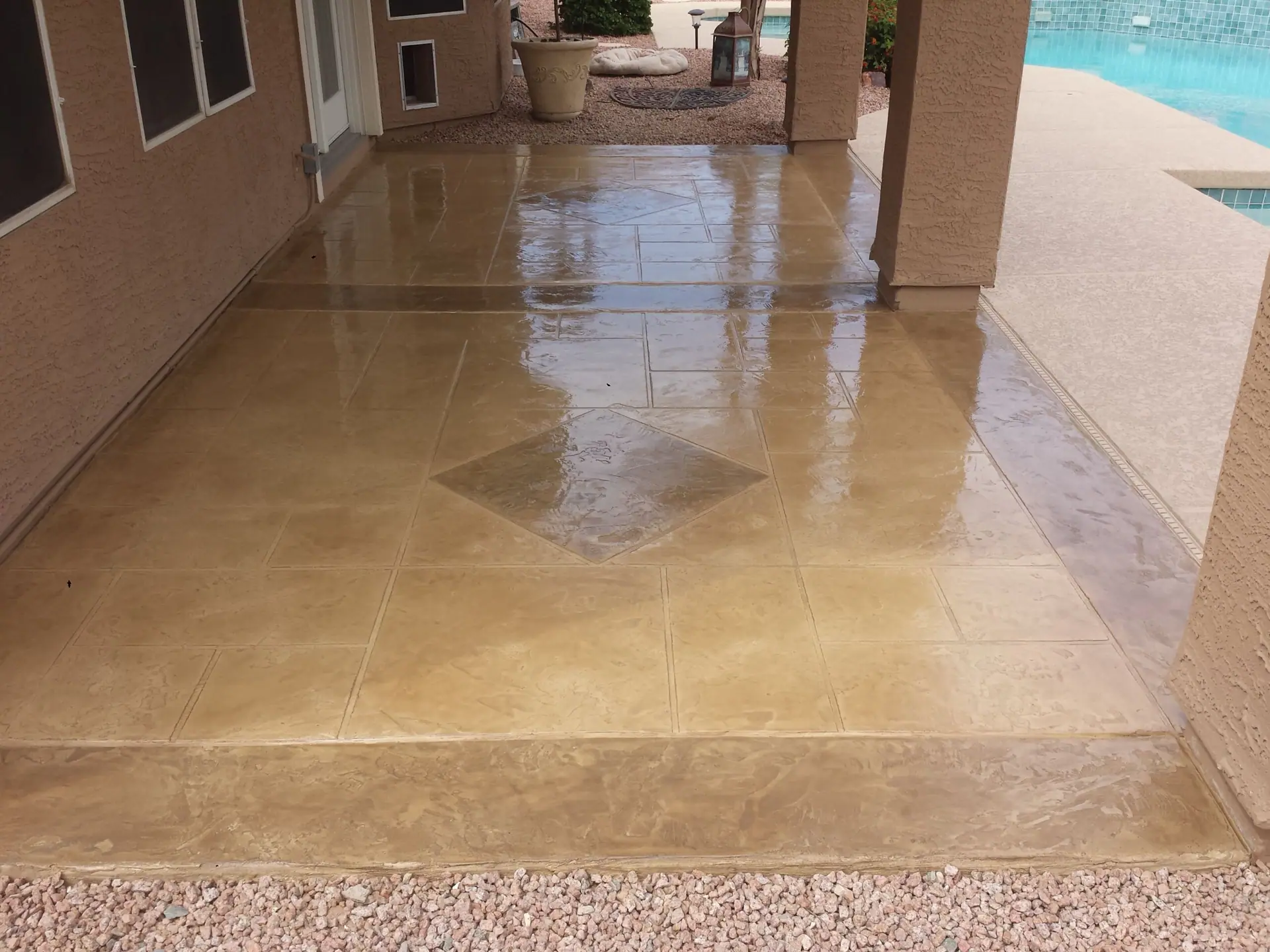
The Arizona specifics
Two things matter more here than they do elsewhere.
Outdoor tile gets hot and gets slick. A glazed tile pool deck or patio in the Phoenix area is uncomfortable barefoot and genuinely hazardous when wet. An overlay is frequently chosen for exactly those two reasons rather than for appearance, and the surface temperature question is covered in cool pool deck surfaces for barefoot comfort.
Hard water deposits. Mineral scale from irrigation and pool splash-out builds a film on outdoor tile that resists ordinary cleaning and blocks bond. It has to be removed mechanically rather than wiped, and it is covered in hard water and mineral staining on pavers and stone.

What a proper quote looks like
A quote to go over tile should name the sounding survey and what it found, the number of tiles being replaced, how the grout lines are being filled, the profiling method, the primer, the system and its thickness, the finished height change and where transitions are being detailed. A quote that says "overlay existing tile" and gives a square foot number has not been thought about.
Our overlay and resurfacing work is on the decorative concrete overlay and pool deck resurfacing pages, and a visit is usually quicker than a phone conversation on this particular question.
Frequently asked questions
Can epoxy or an overlay go directly over ceramic tile?
Over properly prepared tile, yes, with conditions. Every tile has to be bonded, the substrate has to be stable, the finished height increase has to be acceptable, the glaze has to be mechanically ground open, and the grout lines have to be filled flush before the finish system goes on. Over unprepared glazed tile, no. The coating has nothing to bond to and the grout lines show through.
How do I know if my tile is still bonded?
Tap across the floor with a sounding tool or a hard object and listen. A solid tone means the tile is bonded; a hollow tone means the bond beneath has failed. Loose tiles, lifted corners and cracked grout along a line are also signals. The survey takes a short time and it determines whether the answer is replacing a handful of tiles or removing the whole floor.
Will the grout lines show through the new floor?
They will if they are not filled. Grout lines are recesses, and a thin system laid over them telegraphs every one. Filling them flush is a separate step before the finish system, and a thicker overlay absorbs the remaining variation. A thin, high gloss resin film over tile is the combination most likely to show the pattern through.
How much height does going over tile add?
It depends on the system, and the number matters because of door swings, thresholds, appliance clearances and transitions to adjoining rooms. A micro-topping adds little, a broadcast resin system adds more, and a stamped overlay more again. Establish the available height first, because it is the constraint most often discovered after the work has started.
Is it cheaper to coat over tile than to remove it?
Frequently, and not always. If much of the tile is loose, if the slab is cracked or suspected of passing moisture, if the finished height is tight, or if the tile sits on a thick mortar bed, removal is both cheaper and safer in total. Compare the whole scope and the risk, not just the demolition line.
Talk to a licensed coatings contractor.
License ROC317029 · Bonded and insured · Serving Phoenix, AZ and the wider Valley.