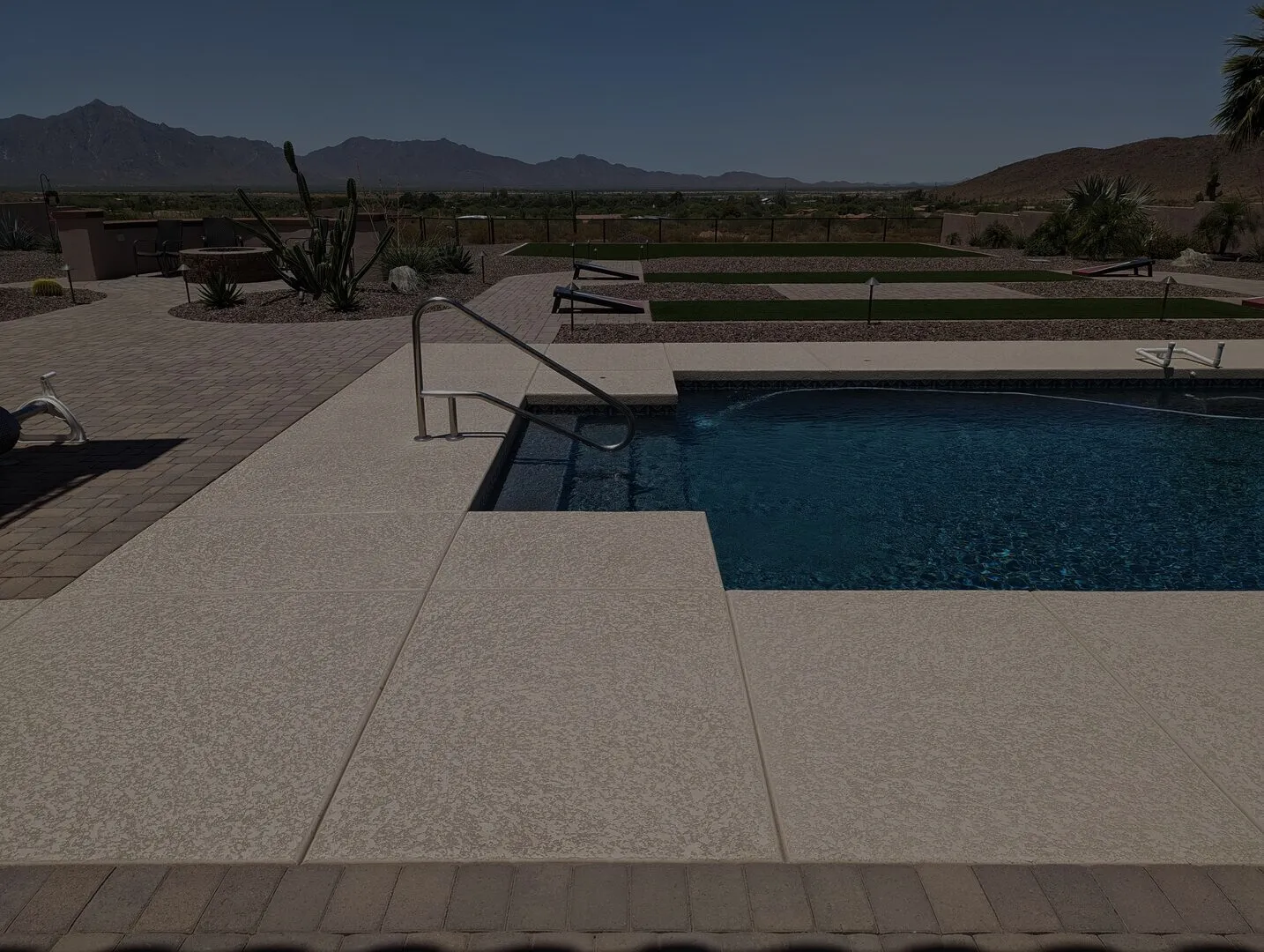



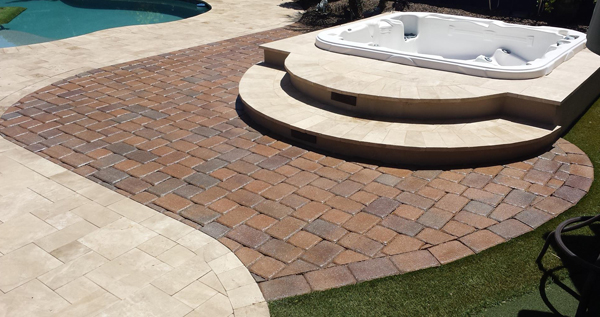
There is a white crust running in a perfect arc across the paver walkway, and it stops exactly where the sprinkler stops. On the travertine near the pool there is a duller version of the same thing. Around the side yard, under the evaporative cooler, the deposit has gone a rusty orange.
Those are three different problems that all came from water. Hard water stains on pavers and natural stone are close to universal in the Valley, and the reason they are so hard to get rid of is that most people reach for the wrong product. On the wrong stone, the wrong product does permanent damage in about four minutes.
The existing guides on this site cover why sealing pavers and stone matters and how the cleaning and sealing process works. This one covers the specific problem of mineral deposits: where they come from, how to tell which one you have, and what will and will not remove each of them.
Where hard water stains on pavers come from in the Valley
Valley water carries a lot of dissolved mineral, mostly calcium and magnesium. Every drop that lands on a hard surface and evaporates leaves that mineral behind. The extreme evaporation rate here means almost every drop evaporates in place rather than running off.
The sources are worth listing because people usually only think of one of them.
- Irrigation overspray. The most common by a wide margin. A misaligned head that clips a paver edge will build a deposit along the same arc for years.
- Drip emitters. Slower and more concentrated. A single emitter near a hardscape edge produces a tight ring of deposit that is often heavier than a spray pattern.
- Pool splash-out. Pool water carries the mineral load of the fill water plus everything concentrated by evaporation over the season.
- Misting systems. Extremely fine droplets that evaporate almost entirely in place. Misters produce a broad even haze rather than a pattern, which makes people blame the stone.
- Evaporative cooler bleed-off. A genuinely Arizona specific source. Coolers concentrate mineral and discharge it, and if that discharge runs onto hardscape the deposit is heavy and often includes rust from the unit.
- Water softener discharge. Salt heavy, and it does its own damage in addition to leaving deposit.
- Downspouts and scuppers. Roof runoff carries dust and mineral, concentrated at the discharge point.
The pattern of the stain tells you the source almost every time. Follow it back and you will find the emitter, the head, or the discharge line.
Three deposits that look similar and behave differently
Hard water scale. Calcium and magnesium carbonate left on the surface. White to light gray, crusty in heavy build-ups, and it sits on top of the material rather than coming out of it. It follows a water pattern and it is hardest where the water hit most often.
Efflorescence. Salts from inside the paver or from the setting bed, brought to the surface by moisture moving through the material. Also white, but it appears across whole units or along joint lines rather than in a spray pattern, and it is very common on new concrete pavers in the first year. It typically vanishes when the surface is wet and returns as it dries.
Iron and manganese staining. Orange, brown or nearly black. Comes from well water, from a corroding fixture or cooler, or from mineral within the stone itself. This one is not a carbonate deposit at all, and nothing that removes scale will touch it.
Getting this identification right is the whole job, because the treatment for each is different and two of the treatments will damage the wrong surface.
The rule that prevents most of the damage
Before any product touches your hardscape, know what the hardscape is made of. Stone divides into two families and they react to acid in opposite ways.
Calcareous stone is calcium carbonate based. Travertine, limestone, marble and most flagstone sold as such in this market fall here. Acid dissolves it. That is not a warning about strong acid, it is true of vinegar. An acidic cleaner on travertine will etch a dull patch into the surface that no amount of cleaning brings back, and since hard water scale is itself calcium carbonate, an acid strong enough to remove the deposit is strong enough to remove the stone under it.
Siliceous stone is silica based. Granite, quartzite, slate and sandstone. These tolerate mild acid, though the setting mortar and joint material around them may not.
Concrete pavers are cementitious, which puts them closer to the calcareous side than most people assume. Strong acid on concrete pavers etches the surface, exposes aggregate, opens the pore structure and leaves the paver more prone to staining than it was before. It also strips color from through-body pigment at the surface.
If you do not know which family your material belongs to, test in a hidden corner and wait. That is the entire test protocol, and skipping it is how a weekend project turns into a replacement.
Removal, mildest first
Work up the ladder. Do not start at the top.
Start with dry mechanical removal. A stiff nylon brush takes off loose surface scale and costs nothing. On heavier build-up a plastic scraper works without scratching. Skip wire brushes on any stone and on colored pavers.
Next, hot water and a neutral pH cleaner with agitation. This handles more than people expect, particularly on deposits that are less than a season old.
If that fails, move to a proprietary mineral deposit remover formulated for your specific material. Products exist that are formulated to be safe on calcareous stone, and using one of those on travertine is the correct approach rather than reaching for a generic descaler. Read what the label says about your material, not what it says about hard water.
For iron and rust staining, the chemistry is different. Rust needs a reducing agent or a chelating product designed for iron, often delivered as a poultice that sits on the surface and draws the stain out. Acid will not remove rust and frequently sets it.
Pressure washing has a place and it also has a limit. It removes loose material and it will not touch bonded scale. Turned up high enough to make a difference on real scale, it erodes the paver surface, blasts out joint sand and destroys the finish. Our pressure washing and sealing guide covers where it does and does not belong in this process.
On a large or valuable surface, this is worth handing to somebody who does it regularly. Our paver and stone sealing crews handle deposit removal as the first phase of the job, because sealing over a deposit locks it in permanently.
Sealing decisions that make deposits manageable
Sealing does not stop mineral deposits. Water still lands on the surface and still evaporates. What sealing changes is where the deposit ends up and how hard it is to remove.
A penetrating sealer, meaning a silane or siloxane that soaks in and leaves no film, fills the pore structure so mineral cannot migrate into it. Deposits sit on the surface where a brush and a mild cleaner can lift them. The surface still looks like stone. This is usually the right answer for a heavily watered area.
A topical film sealer sits on the surface and gives the wet look many people want. It also means any deposit that forms while the film is intact can end up trapped under the next coat if the surface is not cleaned properly first, and film sealers on exterior stone in full Arizona sun have their own service life question.
The choice between them is genuinely a tradeoff rather than a right answer, and it depends on the look you want and how much water hits the surface. The guide to sealing natural stone and the paver and stone sealing essentials page go further into product selection.
Fix the water, not just the stain
Everything above is remediation. None of it lasts if the source keeps running.
Walk your irrigation while it is on, at the time of day it actually runs, and watch where the water goes. Heads drift, pressure changes, and a system that was aimed correctly at install is often not aimed correctly three years later. Adjust or replace anything hitting hardscape. Move drip emitters away from paver edges. Route evaporative cooler bleed-off and water softener discharge to a drain or a landscape area rather than letting it run across stone. Extend downspouts past the hardscape.
That walk takes twenty minutes and it does more for the appearance of your hardscape over five years than any cleaning product.
We have been cleaning and sealing hardscape across the Phoenix metro for twelve years, and the deposit problems we see are almost always fixable at the source. If you want the surface restored and protected properly, our concrete wash and seal team can look at both the stain and what is causing it. Call our Chandler office at (602) 641-5892 for a free estimate.
Frequently asked questions
How do I remove hard water stains from pavers without damaging them?
Work from mildest to strongest. Dry brush with nylon first, then hot water with a neutral pH cleaner and agitation, then a proprietary mineral deposit remover formulated for your specific material. Avoid generic acidic descalers on concrete pavers and on calcareous stone, and always test in a hidden area first and wait to see the result before treating a whole surface.
Can I use vinegar or an acid cleaner on travertine?
No. Travertine is calcium carbonate based and acid dissolves it, including household vinegar. The etched dull patch that results is permanent and cannot be cleaned away. Because hard water scale is also calcium carbonate, any acid strong enough to remove the deposit will attack the stone underneath it. Use a product specifically labelled as safe for calcareous stone.
What is the difference between hard water stains and efflorescence?
Hard water scale is deposited on the surface from outside, from irrigation, pool splash or misting, and it follows the pattern the water made. Efflorescence comes from inside the paver or the setting bed and appears across whole units or along joints rather than in a spray pattern. Efflorescence usually disappears when the surface is wet and returns as it dries.
Will sealing my pavers stop hard water stains?
It will not stop them forming, but it changes where they form. A penetrating sealer fills the pore structure so mineral stays on the surface where a brush and a mild cleaner can remove it, rather than bonding into the paver. The deposit still has to be removed before sealing, because sealing over one locks it in.