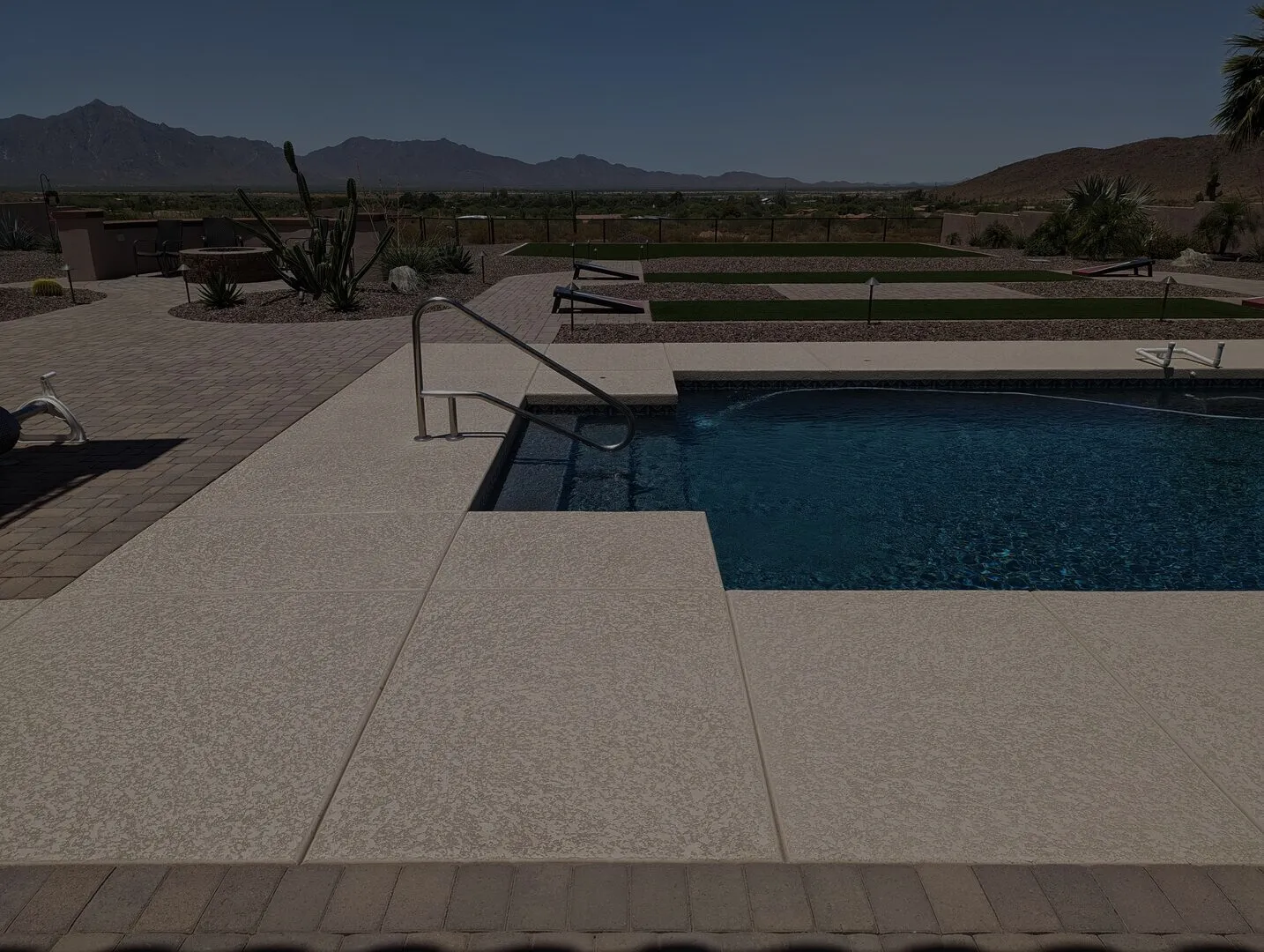



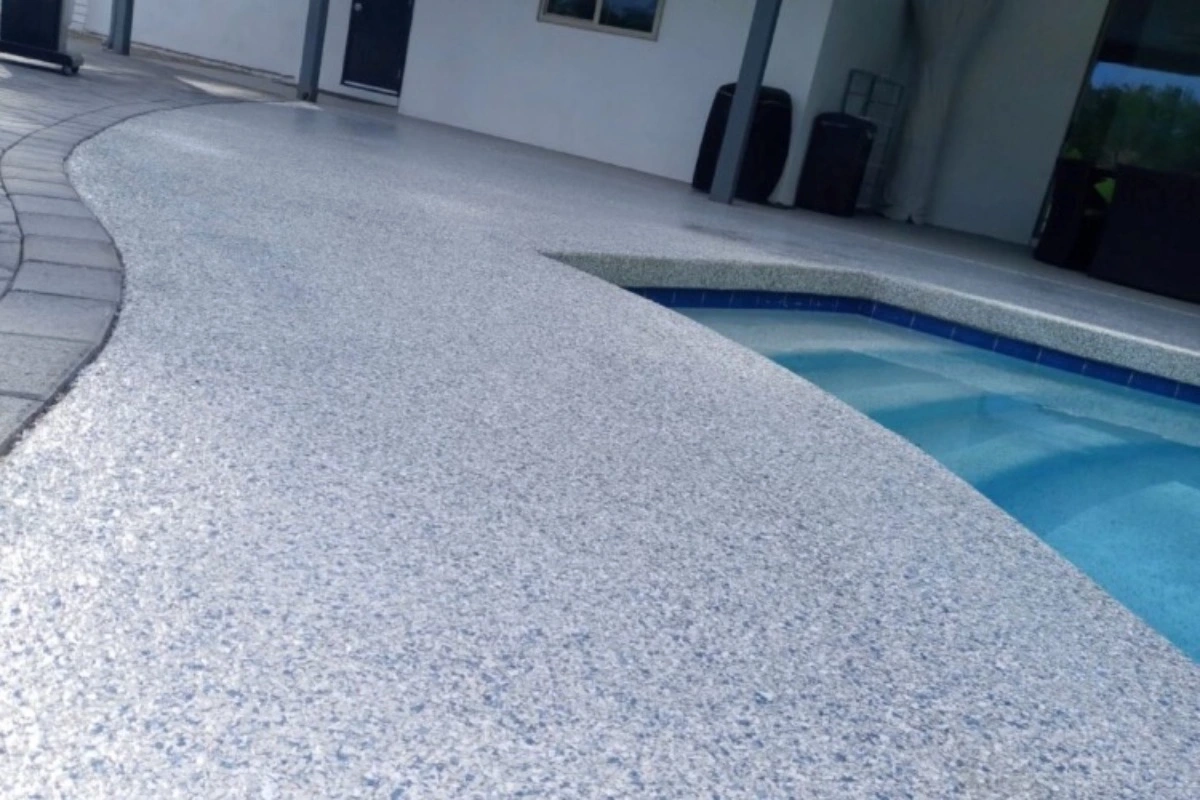
A pool deck takes a beating that most other concrete surfaces never see. It’s submerged in splashed water for hours at a time, baked in direct sun the rest of the day, and exposed to chlorine, salt, and sunscreen chemicals year-round. Pool deck waterproof coating is what keeps that cycle from cracking, staining, and eventually breaking down the concrete underneath. Here’s what actually goes into a system built for that kind of punishment.
Waterproofing vs Sealing: They’re Not the Same Thing
A lot of homeowners assume any sealer will “waterproof” their deck. That’s not accurate, and the distinction matters for how long the deck holds up.
Sealing creates a surface-level barrier that slows water absorption and protects against UV and chemical staining. Standard concrete sealers do this reasonably well for a few years, but they don’t stop water from working its way into hairline cracks or the concrete’s pore structure over time.
Waterproofing is a step further — it involves a coating system engineered to fully block moisture penetration, often with some flexibility built in to bridge minor cracks and movement in the slab without failing. True waterproof systems are typically thicker, elastomeric, and rated specifically for standing water or constant wet exposure.
For a pool deck, which deals with both direct water contact and below-grade moisture from ground contact, a genuine waterproofing system does more long-term protective work than a basic sealer, even though sealers cost less upfront.
Coating Options by Performance Level
Acrylic concrete sealers are the entry-level option. They’re affordable, easy to reapply, and provide decent UV and stain protection, but they wear faster under heavy pool traffic and don’t offer real waterproofing against sustained moisture.
Elastomeric waterproof coatings are built with flexible polymers that stretch and move with the slab, bridging small cracks instead of cracking with them. These are the standard choice for decks with any history of hairline cracking or slab movement.
Cementitious waterproof overlays combine a cement-based product with waterproofing additives, giving you both a resurfaced look and genuine moisture protection in one system. These work well for decks that need cosmetic repair alongside waterproofing.
Polyurethane and polyaspartic coatings offer excellent water resistance along with strong UV stability and abrasion resistance, making them a durable mid-to-high-tier option for decks that see heavy daily use.
Epoxy-based deck systems, while less common for pool decks specifically due to UV sensitivity in some formulations, can work well when paired with a UV-stable topcoat, offering strong chemical and water resistance underneath.
Texture and Safety Considerations
Waterproofing and slip resistance need to work together on a pool deck, not against each other. A perfectly waterproof but glass-smooth coating is a safety hazard the moment it gets wet.
Most quality waterproof deck systems incorporate texture through one of a few methods: broadcast aggregate embedded into the wet coating, a textured roller or spray application, or a fine anti-slip additive blended directly into the topcoat. The texture should be fine enough for comfortable bare-foot use but coarse enough to maintain grip when the surface is wet, which on a pool deck is almost always.
Color also plays into comfort, not just looks. Lighter, cooler-toned coatings reduce surface heat buildup in direct sun, which matters as much for safety (avoiding burned feet) as it does for aesthetics.
Climate Fit: Why Location Changes the Right Choice
The right waterproof coating for a deck in a hot, dry climate is not necessarily the right one for a humid coastal property or a region with hard freeze-thaw cycles.
- Hot, sun-intense climates need UV-stable topcoats that resist chalking and fading, since sun degradation is the dominant failure mode.
- Coastal and high-humidity areas need coatings with strong resistance to salt exposure and consistent moisture, since the deck rarely gets a chance to fully dry out.
- Freeze-thaw climates need flexible, elastomeric systems that can handle repeated expansion and contraction from water freezing in the slab or coating without cracking.
- High-chlorine, heavily chemically treated pools need coatings rated specifically for chemical resistance, not just general waterproofing, since chlorine splash-out degrades weaker coatings over time.
A contractor familiar with your specific region should be recommending a system based on these local conditions, not a one-size-fits-all product.
What Drives the Cost of a Waterproof Pool Deck Coating
Several factors determine what a waterproofing project actually costs:
- Current deck condition — decks needing crack repair, spalling repair, or leveling cost more than a deck ready for direct coating.
- System type — basic acrylic sealers cost far less than elastomeric or polyurethane waterproof systems.
- Square footage and deck complexity — decks with lots of edges, steps, or decorative borders take more labor time than a simple rectangular slab.
- Texture and color customization — solid single-color finishes cost less than multi-tone or decorative texture work.
- Regional labor and material costs, which vary by market.
Getting a site-specific quote after an in-person deck assessment is the only reliable way to know what your project will actually run, since condition varies so much deck to deck.
FAQ
Do I need to waterproof my pool deck, or is sealing enough?
If your deck has any hairline cracking, sits on ground with drainage issues, or you want the longest possible protection against chlorine and UV damage, a true waterproofing system outperforms basic sealing over the life of the deck.
How long does a waterproof pool deck coating last?
Most quality waterproof systems last 5-10 years before needing a full recoat, with lighter maintenance resealing recommended every 2-3 years depending on sun and chemical exposure.
Can waterproof coating fix existing cracks in my pool deck?
Elastomeric and cementitious overlay systems can bridge minor hairline cracks, but larger structural cracks need to be repaired first. Waterproofing is not a substitute for structural crack repair.
Will a waterproof coating make my deck too hot to walk on?
Color and finish matter more than the waterproofing itself. Lighter, cool-toned coatings keep surface temperature manageable even in direct sun, regardless of the waterproofing technology underneath.
Is waterproof pool deck coating slippery when wet?
Not if installed correctly. Quality waterproof systems incorporate texture specifically to maintain slip resistance when wet, which is a standard part of pool deck coating design, not an optional add-on.
Protect Your Deck From the Inside Out
Rock Star Coating Pros installs waterproof pool deck systems matched to your climate, your pool’s chemical profile, and how your family actually uses the space. Contact us for a deck assessment and a recommendation built around what your slab needs, not a generic package.