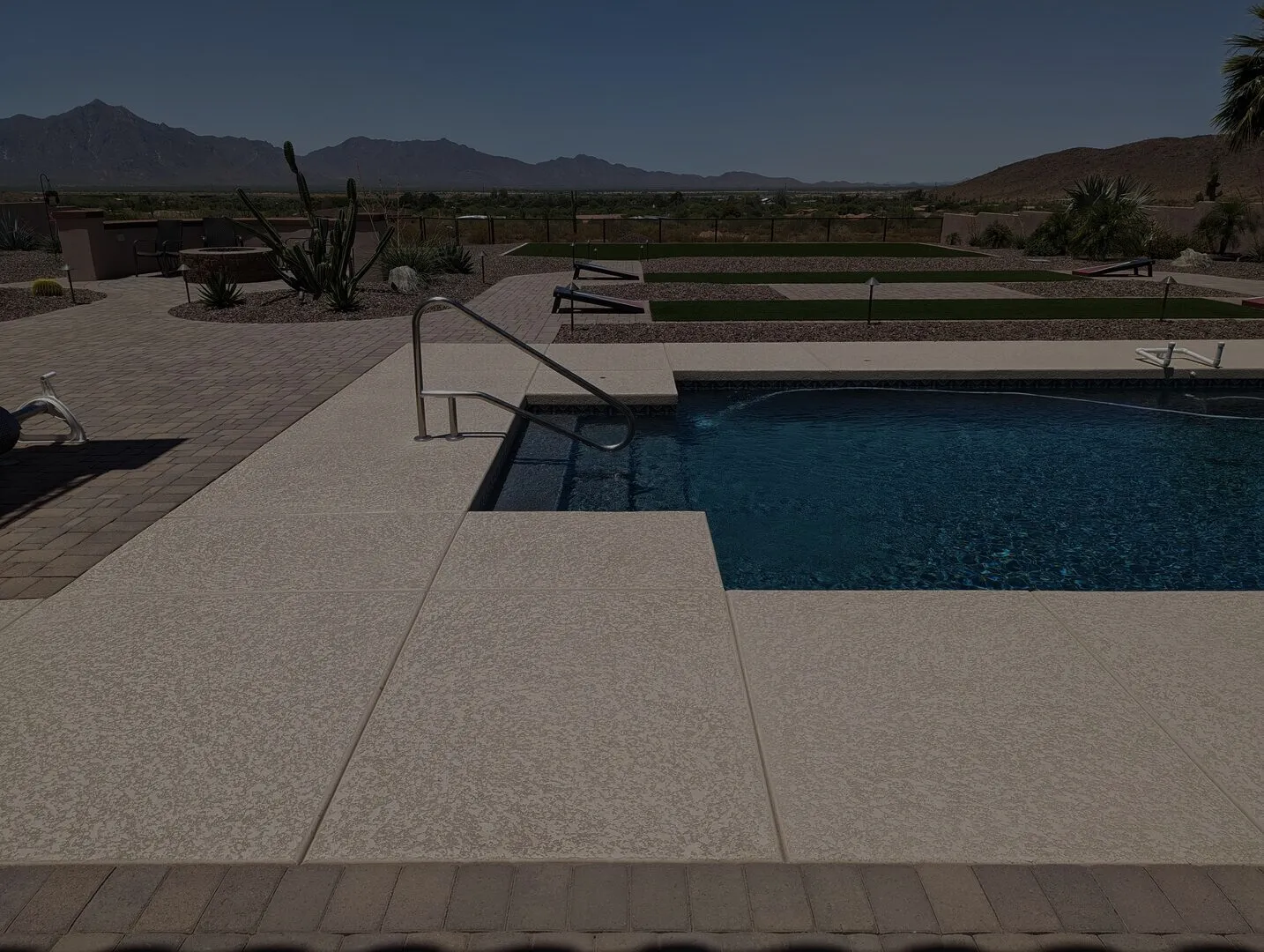



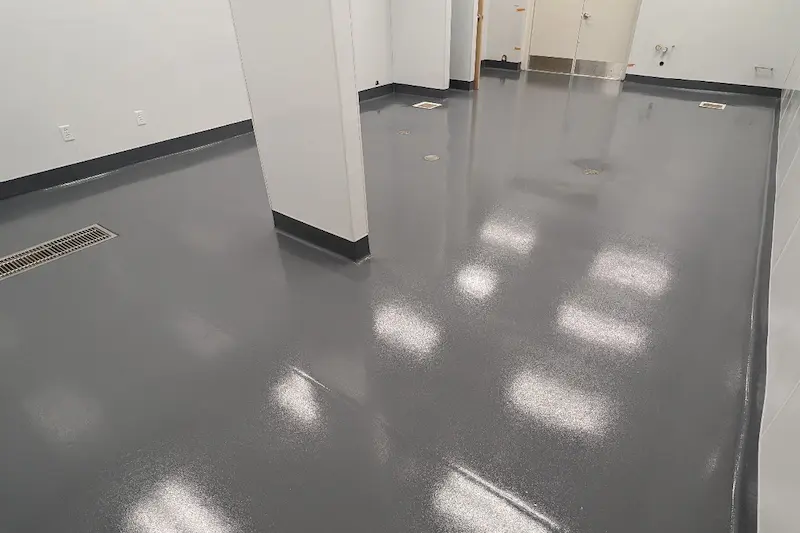
You cleared out the garage, you picked your finish, and now there is only one thing left on your mind: how long is my floor going to be out of commission? It is the question we hear most, usually right after “will it actually last?” Both are fair. Nobody wants their two-car garage roped off for a week with no clear answer, and nobody wants a floor that peels the first summer it sees real Arizona heat.
So let’s walk through it honestly. Here is what a professional epoxy installation actually looks like day to day, when you can walk and drive on it, what can push the timeline out, and what our warranty covers once the crew packs up.
How long does an epoxy floor take?
Most residential epoxy floors are a one to three day job. A standard garage that is in good shape often comes together in a day or two of hands-on work. Larger spaces, floors that need crack repair, or multi-layer systems like a full metallic pour run closer to three days because each coat has to set before the next one goes down.
That is the install window. It is not the same as the cure window, and the difference is where most of the confusion lives. The crew can be done and gone while the floor is still hardening underneath your feet. We will come back to that.
Step by step: what happens on install day
The finish is the part you see. The prep is the part that decides whether that finish is still bonded to your slab in ten years. Here is the order we work in.
Surface prep and moisture check. First we clear and clean the slab, degrease it, and test it. Concrete holds moisture even when it looks bone dry, and vapor moving up through the slab is one of the top reasons a coating bubbles or lifts later. A calcium chloride test (the ASTM F1869 standard) tells us whether the slab is dry enough to coat. If it reads high, we deal with it before anything else goes down.
Diamond grinding. We open up the concrete with a diamond grinder to create a profile, a fine texture the epoxy can grab onto. This is the step budget crews love to skip because acid etching is faster and cheaper for them. It is also why so many box-store and weekend-crew floors fail. Grinding gives you a mechanical bond; a splash of acid does not. Then we vacuum every bit of dust so the surface is clean.
Crack and joint repair. Chips, cracks, and pitting get filled and leveled. If your slab has existing damage, this is when it gets addressed so it does not telegraph through the finished coat. (If you are dealing with cracks or bubbles on an older epoxy floor, our guide to epoxy floor repair breaks down what is fixable and what is not.)
Base coat, then the decorative layer. The primer and base coat go on, followed by your chosen system, solid color, full chip or flake, or a poured metallic epoxy finish with that high-gloss, flowing-liquid-metal look.
Topcoat. A clear protective topcoat seals everything in. This is the layer taking the daily abuse: tires, oil, dropped tools, the works.
Curing versus dry: when can you walk and drive on it?
Dry to the touch and fully cured are two different milestones, and this is the part worth reading twice.
As a general rule, you can put light foot traffic on the floor after about 24 hours. Vehicles are a longer wait. Most floors handle car traffic after roughly 72 hours, and we recommend giving it a full 7 days before you park heavy loads, roll a loaded toolbox back in, or drop anything with real weight on it. Rush it and you can leave tire marks or press debris into a coat that has not finished hardening.
Temperature drives all of it. Epoxy cures best somewhere in the 60 to 90 degree range. Warmth speeds the reaction along, cold drags it out. Here in the Phoenix metro that usually works in your favor, but not always the way people expect. A slab that has been baking through a July afternoon can flash the coating faster than we want, and monsoon humidity changes the math too. That is exactly why we read the conditions in your specific garage on install day and give you real numbers for your floor, not a chart off the internet. Twelve years working across Phoenix, Chandler, Mesa, Scottsdale and the rest of the valley has taught us that the calendar date matters as much as the product.
What can slow a job down
We would rather set the timeline honestly than promise you a single day and blow past it. A few things genuinely add time, and none of them are worth rushing:
- A slab that fails the moisture test. Coating over a wet slab is how you buy bubbles and delamination. We wait, or we correct it first.
- Hidden slab damage. Deep cracks or spalling that only show up once we start grinding need proper repair before coating.
- Weather. Extreme heat or a monsoon spike in humidity can mean adjusting the schedule so a coat sets right.
- Layered finishes. Metallic and multi-flake systems simply have more coats, and each one needs its own set time.
None of these are common on a healthy garage slab. But when they show up, taking the extra time is the difference between a floor that lasts and a callback.
What the warranty covers, and how to keep it valid
We back our work with an unbeatable warranty because we use commercial-grade products and our certified installers put them down the right way. The warranty stands behind proper installation and the performance of the coating system, so a floor that was prepped and installed to spec keeps peeling, lifting, and adhesion failures on us, not on you.
Keeping it valid is mostly common sense. Let the floor cure on the schedule we give you before you load it back up. Clean it with the methods we walk you through (epoxy is genuinely easy to maintain, which is half the appeal). And do not take a grinder or harsh solvent to it yourself. Normal use is exactly what these floors are built for. Arizona heat, oil spills, daily traffic, that is the job.
One honest caveat: a warranty covers the coating and the installation. It is not a promise that a slab with a pre-existing structural problem will never move again. If your concrete has a deeper issue, we will tell you straight before we coat it, because we would rather lose a day than sell you a floor over a problem we know is there.
Ready to schedule?
If you are weighing an epoxy floor for a garage, shop, or a larger commercial space, the honest first step is a look at your actual slab. Every timeline in this article is a typical range, and your floor is not a typical range, it is a specific slab in a specific building.
We are your Phoenix, Arizona epoxy coatings experts, licensed, bonded, and insured under ROC317029, with 12 years across the valley behind every job. Want real numbers for your space and your schedule? Request a free estimate, or call us at 602-641-5892 and we will take a look.