


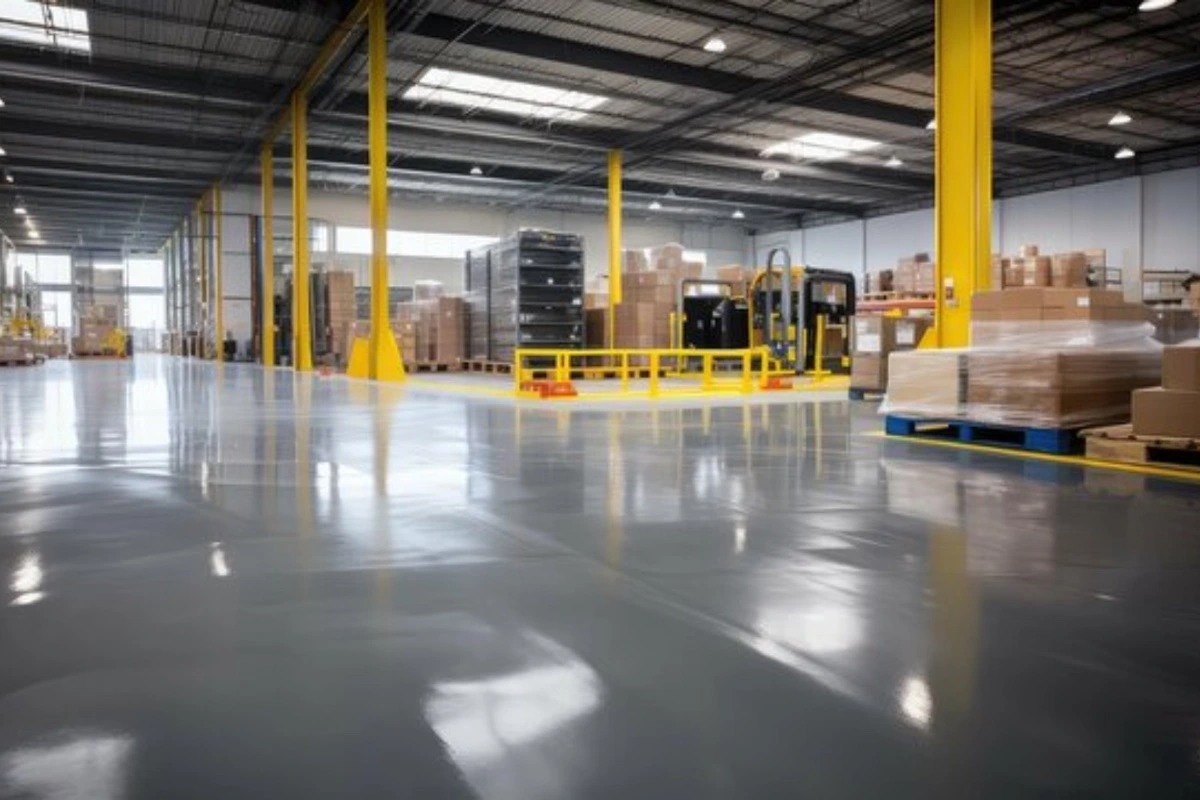
Industrial facilities put more stress on a floor in one shift than most commercial spaces see in a year. Forklifts, pallet jacks, chemical spills, dropped tools, thermal shock from wash-downs — a standard concrete slab cannot take that kind of abuse and keep looking or performing like new. Industrial epoxy floor coating exists to solve that problem. It turns a porous, vulnerable slab into a sealed, chemical-resistant, load-bearing surface that can run for a decade or more with the right maintenance.
This guide breaks down what industrial epoxy coating actually is, which system fits which facility, what prep work makes or breaks the installation, and how to keep the floor performing once it’s down.
What Makes Industrial Epoxy Coating Different
Residential and light-commercial epoxy is built for foot traffic, light rolling loads, and cosmetic appeal. Industrial epoxy is a different animal. It’s formulated for:
- Heavy point loads from racking, machinery, and stacked pallets
- Constant forklift and pallet jack traffic, often with metal or hard poly wheels
- Chemical exposure — oils, solvents, acids, cleaning agents, and de-icing salts
- Thermal cycling in facilities with freezers, ovens, or outdoor loading docks
- Impact resistance from dropped tools, parts, and equipment
To handle that, industrial systems use higher-build epoxy resins, thicker mil thickness, and often a full broadcast of aggregate or quartz to add mechanical strength, not just texture.
Facility Types That Need Industrial-Grade Systems
Not every commercial building needs the heaviest system available. The right coating depends on what happens on that floor every day.
Manufacturing Plants
Manufacturing floors deal with vibration, heavy equipment, and often chemical byproducts from the production process. These floors typically need a high-build epoxy or epoxy-urethane hybrid with strong chemical resistance and enough thickness to absorb impact without cracking or delaminating.
Warehouses and Distribution Centers
Warehouses are defined by traffic volume, not necessarily chemical exposure. The priority here is abrasion resistance and long-term durability under constant forklift movement. A self-leveling epoxy system with a hardener topcoat is usually the right call, especially in aisles that see the most repetitive wheel traffic.
Food and Beverage Processing
These facilities need coatings that meet sanitation standards, resist frequent hot-water wash-downs, and hold up to acidic or fatty residue. Seamless, coved systems that eliminate cracks and grout lines (where bacteria can hide) are standard here, often paired with slip-resistant broadcast for wet-floor safety.
Auto and Equipment Repair Shops
Repair facilities deal with oil, grease, hydraulic fluid, and coolant on a daily basis. Chemical-resistant epoxy with a textured, slip-resistant finish protects the slab from staining and degradation while keeping the floor safe underfoot.
Cold Storage and Freezer Facilities
Thermal cycling between ambient and freezing temperatures puts extreme stress on a coating’s bond to the slab. These floors need systems specifically engineered for low-temperature flexibility to avoid cracking and delamination over repeated freeze-thaw cycles.
Industrial Epoxy System Types
Once the facility type is clear, the next decision is which system architecture fits.
Self-leveling epoxy creates a smooth, seamless, high-gloss or satin surface. It’s ideal for warehouses and light manufacturing where a clean, durable, easy-to-clean floor matters more than heavy chemical exposure.
Epoxy mortar systems are the heavy-duty option. A trowel-applied blend of epoxy resin and graded sand aggregate, mortar systems can be built up to a quarter inch or more thick. They’re used where impact resistance and structural repair are both needed — think manufacturing floors with dropped tooling or heavy machinery relocation.
Quartz-filled broadcast systems combine epoxy with colored quartz aggregate for a decorative, slip-resistant, and durable surface. Common in food processing, retail-adjacent warehouse space, and anywhere appearance matters alongside performance.
Epoxy-urethane hybrids apply a urethane topcoat over an epoxy base. This gets you the strength and adhesion of epoxy with the UV stability, abrasion resistance, and chemical tolerance of urethane — a strong choice for facilities with mixed indoor/outdoor exposure or heavy chemical contact.
100% solids epoxy offers the highest chemical and abrasion resistance of any epoxy category, with minimal shrinkage during cure. It costs more but it’s the standard for the harshest industrial environments.
Surface Prep: The Part That Determines Everything
More industrial coating failures come from bad prep than from bad material. Concrete surface prep isn’t optional or negotiable on these projects.
- Moisture testing. Industrial slabs, especially older ones or those without a vapor barrier, need calcium chloride or relative humidity testing before anything goes down. Moisture vapor pushing up through the slab is the number one cause of delamination.
- Mechanical surface preparation. Diamond grinding or shot blasting opens the concrete’s pore structure so the epoxy can mechanically bond. Acid etching alone is not sufficient for industrial loads.
- Crack and joint repair. Existing cracks, spalling, and control joints need to be repaired or addressed with the right joint filler before coating, or they will telegraph through the new floor and become failure points.
- Contamination removal. Old sealers, oil saturation, and adhesive residue all have to be fully removed. Epoxy will not bond permanently over contaminated concrete, even if it looks fine on installation day.
- Slab profile matching. The concrete surface needs the correct CSP (Concrete Surface Profile) rating for the system being installed. A mortar system needs a rougher profile than a thin self-leveling topcoat.
Skipping any of these steps shows up later as bubbling, peeling, or full delamination under the heaviest traffic lanes — usually within the first year.
Maintenance That Extends the Floor’s Life
A properly installed industrial epoxy floor is low-maintenance, not no-maintenance.
- Daily/weekly: Sweep or dust-mop to remove grit that acts like sandpaper under wheeled traffic. Wipe up chemical spills promptly, even on resistant coatings, to avoid long-term staining.
- Routine cleaning: Use a pH-neutral cleaner and an auto-scrubber or mop for larger areas. Avoid harsh acidic or highly alkaline cleaners unless the coating is specifically rated for them.
- Traffic management: Use floor protection or matting at known impact zones — forklift turning areas, loading dock approaches, and equipment staging spots — to slow wear in high-stress zones.
- Recoat topcoats on schedule. Depending on traffic volume, urethane or epoxy topcoats may need a fresh recoat every 3-7 years, well before the base system needs replacement. This is far cheaper than a full re-coat.
- Inspect for early wear. Dulling, hairline cracking, or chalking in high-traffic lanes are early warning signs. Addressing them with a maintenance topcoat early prevents a full tear-out and reinstall later.
Choosing a Contractor for Industrial Epoxy Work
Industrial coating is not a DIY-scale project, and it’s not a job for a contractor whose main business is decorative residential floors. Ask any contractor you’re evaluating:
- What moisture and surface prep testing do you run before quoting a system?
- Can you show documented installs in facilities similar to mine (traffic type, chemical exposure, temperature range)?
- What warranty do you offer, and does it cover delamination as well as wear?
- How do you handle scheduling around production downtime?
- What system do you recommend for my specific traffic and chemical profile, and why?
A contractor who can answer these with specifics, rather than a generic pitch, is the one who understands industrial floors well enough to get the prep right the first time.
FAQ
How long does industrial epoxy flooring last?
A properly installed and maintained industrial epoxy system typically lasts 10-20 years for the base system, with topcoat recoats needed every few years in high-traffic areas to keep wear resistance and appearance up.
How much does industrial epoxy flooring cost?
Costs vary widely based on system type, square footage, and prep needs, but industrial-grade systems generally run higher than standard commercial epoxy due to thicker application and heavier-duty materials. Get a site-specific quote based on your traffic and chemical exposure.
Can industrial epoxy be installed without shutting down operations?
Partial installs are possible with phased scheduling, but epoxy needs uninterrupted cure time and controlled foot/vehicle traffic during application. Most facilities schedule installation during planned downtime, weekends, or shift gaps to minimize disruption.
Is epoxy or polished concrete better for a warehouse?
Epoxy offers better chemical resistance and can be built up thicker for impact protection, which most warehouses with forklift traffic need. Polished concrete costs less upfront but offers less protection against spills and heavy point loads.
Does industrial epoxy need a vapor barrier under the slab?
It’s strongly recommended, especially for slabs on grade. Without one, moisture vapor transmission from the ground can undermine the coating’s bond over time regardless of how well the topside prep was done.
Ready for a Floor That Can Take the Load?
If your facility’s floor is showing wear, failing to meet sanitation or safety standards, or simply wasn’t built for the traffic it sees every day, Rock Star Coating Pros can assess your slab and recommend the right industrial epoxy system for your operation. Contact us for a site evaluation and a straight answer on what your floor actually needs.