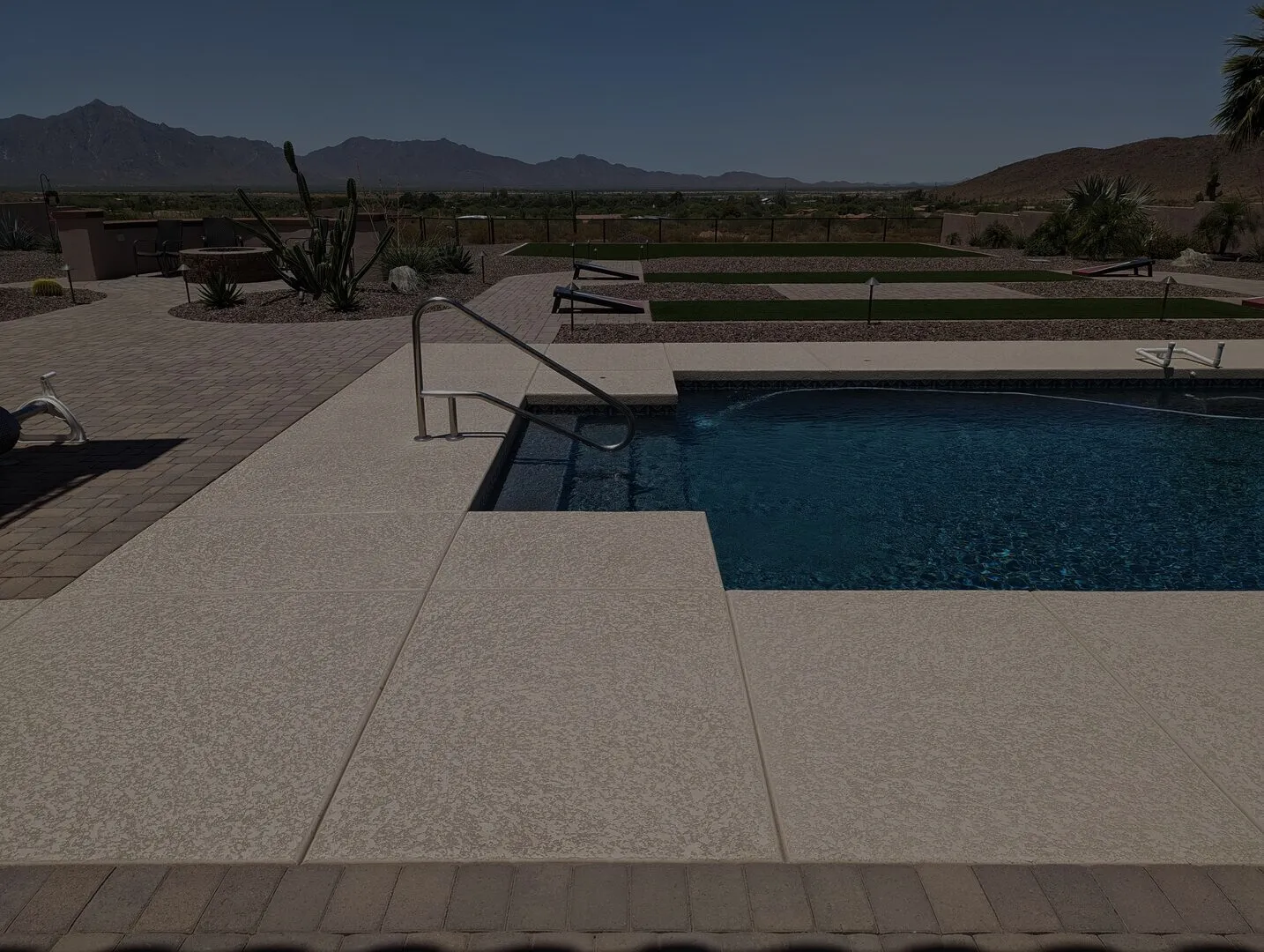



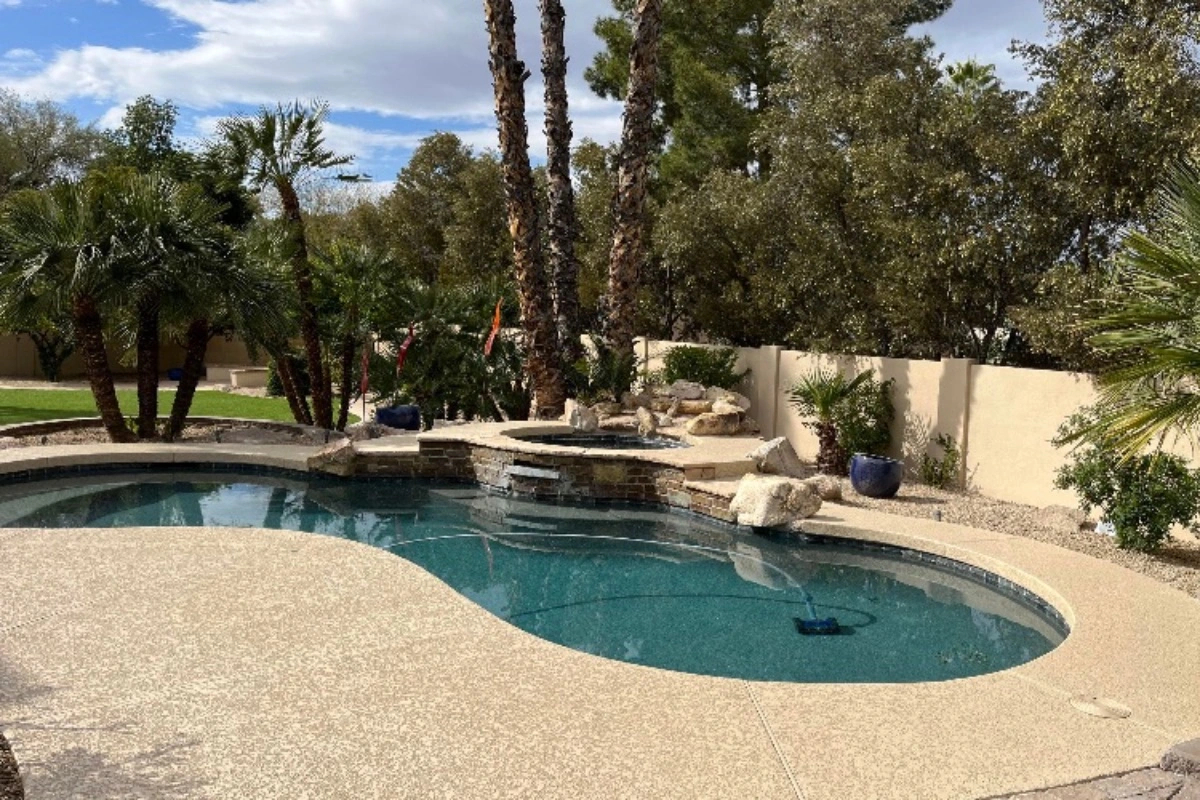
Wet concrete and bare feet are a bad combination. A pool deck sees constant water, sunscreen residue, and pool chemicals tracked across its surface every single day it’s in use, and every one of those makes a smooth surface more dangerous. Skid-resistant pool deck coating solves the safety problem without turning your deck into something rough and unpleasant to walk on barefoot. Here’s how to choose the right one.
Why Slip Resistance Matters More Than Most Homeowners Realize
Pool deck falls are one of the most common backyard injuries, and they’re almost entirely preventable with the right surface. A few things make pool decks uniquely risky compared to other outdoor concrete:
- Constant wetness. Unlike a driveway or patio that dries between uses, a pool deck stays wet for hours after swimming, and often overnight in humid climates.
- Chemical film. Sunscreen, oils, and pool chemicals build up on the surface and reduce traction even on a textured deck if it isn’t cleaned regularly.
- Bare feet. Most people walk around a pool without shoes, which removes the grip that tread patterns on footwear would normally provide.
- Temperature. Hot, smooth concrete or old paint can also cause people to walk unnaturally to avoid burning their feet, increasing fall risk.
A skid-resistant coating addresses the traction problem directly by building texture into the surface itself, rather than relying on the concrete’s original finish, which degrades over time.
Texture Systems: How Slip Resistance Actually Gets Built In
There isn’t one single “non-slip coating.” Slip resistance comes from a handful of application methods, each with a different feel underfoot and a different level of grip.
Aggregate broadcast. Fine sand, ground rubber, or polymer grit is broadcast into a wet coating layer and locked in as it cures. This is the most common and most tunable method — more aggregate means more grip, but also a rougher feel, so the ratio matters for comfort.
Textured overlay systems. A cementitious or acrylic overlay is applied with a textured roller, trowel, or spray pattern that creates a consistent surface texture across the whole deck. These tend to look more finished and uniform than broadcast systems.
Knockdown or stomp texture. A decorative overlay technique where texture is stamped or knocked down into a still-wet coating, giving a slightly irregular, natural stone-like texture that also happens to be highly slip-resistant.
Additive-blended sealers. For decks that already have decorative concrete or an existing overlay, a clear sealer with fine anti-slip additive mixed in can add traction without changing the look or color of the surface.
The right choice usually comes down to how much texture is acceptable for bare feet, and whether you want the coating to also serve a decorative purpose.
Color and Finish Options
Skid-resistant doesn’t mean limited to gray. Most texture systems can be tinted or layered with color in several ways:
- Solid color coatings in a wide range of tones, often chosen to match or complement the home’s exterior and reduce glare and surface heat compared to plain white or light gray.
- Variegated or multi-tone finishes that mimic natural stone, giving the deck visual depth instead of a flat, single-color look.
- Cool-deck style tinted coatings specifically formulated to stay cooler underfoot in direct sun, which matters as much as slip resistance in hot climates.
- Decorative borders and accents using a different texture or color around the pool edge, a common way to define zones and add visual interest without sacrificing grip.
Darker colors show less staining from leaves, chemicals, and general use, but they also absorb more heat. Lighter, warm-toned finishes balance temperature and stain visibility better for most climates.
Maintenance: Keeping the Slip Resistance Working
A skid-resistant coating loses effectiveness if it isn’t maintained, because the same buildup that makes decks slippery in the first place (sunscreen, algae, chemical residue) will fill in the texture over time.
- Rinse regularly. A simple hose-down after heavy pool use removes surface residue before it builds up in the texture.
- Scrub periodically. A stiff-bristle broom with a mild cleaner a few times a season clears out embedded grime that a rinse alone won’t remove.
- Watch for algae. Shaded or consistently damp areas of the deck are prone to algae growth, which is both slippery and unsightly. Treat these spots promptly.
- Reseal on schedule. Most textured pool deck coatings need a fresh sealer coat every 1-3 years depending on sun exposure and traffic, which restores both the look and the slip resistance of the surface.
- Avoid pressure washing at high PSI directly on the coating, since aggressive pressure washing can wear down texture and strip color from softer overlay systems over time.
Contractor Questions Worth Asking
Not every concrete contractor works with pool deck-specific coatings, and the wrong system for your climate or usage pattern will fail early. Before hiring anyone, ask:
- What slip-resistance rating does this system carry, and how is that measured?
- How does this coating perform in full sun in our climate specifically?
- What’s the expected recoat interval for a deck with our pool usage level?
- Can you show completed pool deck projects with the same texture system?
- Does the coating extend past the coping edge, and how is that transition detailed?
A contractor who installs pool decks regularly should be able to walk you through texture options in person and let you feel the difference between systems before you commit.
FAQ
What is the most slip-resistant pool deck coating?
Aggregate broadcast systems with a heavier grit loading generally provide the highest measurable slip resistance, though they trade off some barefoot comfort. Textured overlays offer a good middle ground for most residential pools.
Do skid-resistant coatings get hot in direct sun?
Texture alone doesn’t reduce heat much, but lighter colors and cool-deck style tinted coatings significantly reduce surface temperature compared to dark, smooth concrete or standard paint.
Can I add slip resistance to an existing decorative concrete pool deck?
Yes. A clear or lightly tinted sealer with anti-slip additive can be applied over most existing decorative overlays without changing the color or pattern already in place.
How often does a pool deck coating need to be redone?
Full recoating typically happens every 5-10 years depending on the system and climate, with lighter maintenance resealing every 1-3 years to keep both appearance and traction performing well.
Is a rougher texture always safer?
Not necessarily. Extremely rough textures can be uncomfortable and even abrasive on bare feet. A properly calibrated texture balances grip and comfort so people walk normally instead of avoiding the surface.
Get a Pool Deck That’s Safe and Built to Last
If your pool deck is showing wear, feels slippery when wet, or just needs a refresh, Rock Star Coating Pros installs skid-resistant coating systems built for your climate and how your family actually uses the pool. Contact us for a free deck assessment and a texture recommendation suited to your space.