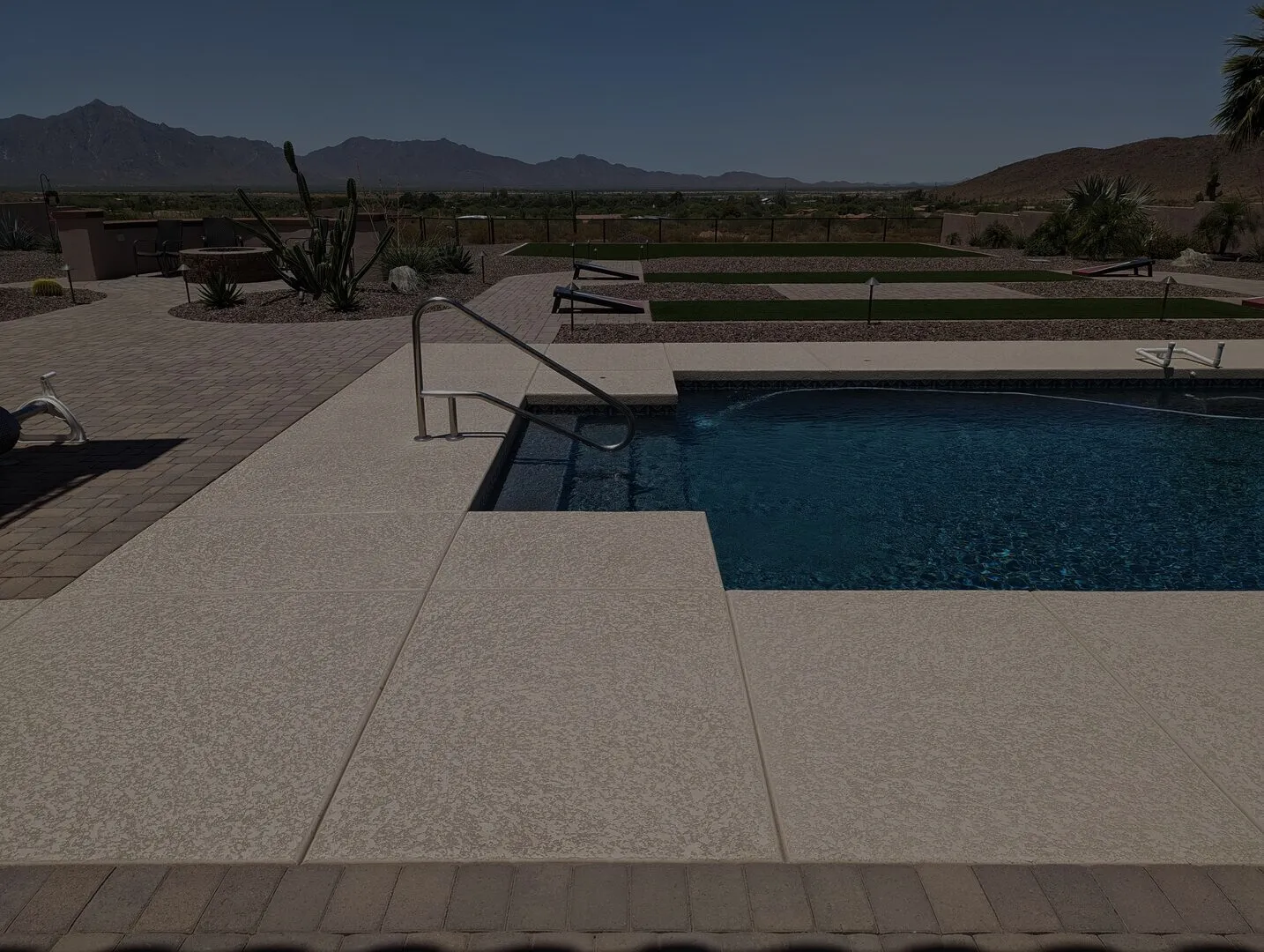




Concrete Pool Deck Resurfacing: Transform Your Backyard into a Stylish, Safe Oasis
Why Concrete Pool Deck Resurfacing Matters
Your pool deck is more than a border—it’s the foundation for backyard comfort, safety, and style. Over time, concrete decks can crack, fade, or become slick and unsafe. Concrete pool deck resurfacing solves all of that—renewing your surface with texture, color, and long-lasting performance.
Whether you want a new look or improved safety, resurfacing provides an affordable alternative to complete replacement. At Rock Star Coating Pros, we offer a range of customizable finishes that work for every budget and backyard aesthetic.
Comparison Table: Pool Deck Resurfacing Options
Before choosing a finish, explore how common resurfacing materials compare. Each resurfacing solution offers distinct benefits depending on your priorities—whether that’s comfort, aesthetics, safety, or durability. This comparison table is designed to help you easily evaluate the top choices available so you can make a confident and informed decision that aligns with your lifestyle and design goals.
| Resurfacing Type | Appearance | Texture & Comfort | Avg. Lifespan | Best Use Case |
| Acrylic Pool Deck Resurfacing | Clean, modern | Slip-resistant, cool | 5–8 years | Budget-friendly & heat-prone areas |
| Rubber Pool Deck Resurfacing | Soft, colorful | Cushioned, safe | 8–12 years | Kid-safe zones, splash pads |
| Stamped Concrete Pool Deck Resurfacing | High-end, decorative | Varied, stone-like | 10–15 years | Luxury patios, aesthetic makeovers |
| Cement Pool Deck Resurfacing | Neutral, basic | Basic, can be slippery | 3–6 years | Temporary fix, rental properties |
Local Insight: How Our Climate Affects Pool Deck Surfaces
In hot, humid, or sunny regions, UV rays and rain can rapidly wear down unsealed concrete. Without resurfacing, cracks spread, mold grows, and slip risks increase. That’s why concrete pool deck resurfacing is not just cosmetic—it’s preventative.
At Rock Star Coating Pros, we recommend UV-stable, slip-resistant coatings designed to stay cool and clean, especially for families and active outdoor use.
Concrete Pool Deck Resurfacing Options Explained
Modern resurfacing is about more than plain concrete. Here are your top concrete pool deck resurfacing options:
-
Acrylic coatings: Economical, heat-reflective, and available in many colors
-
Rubber overlays: Soft and shock-absorbent, ideal for barefoot traffic
-
Stamped concrete overlays: Mimic stone, tile, or wood without the maintenance
-
Spray texture finishes: Lightly textured for slip resistance
-
Integral color coatings: Add color pigment directly into the resurfacer for a fade-resistant finish
Each option offers varying levels of traction, design potential, and weather durability.
Concrete Pool Deck Resurfacing Before and After
Seeing transformation firsthand is one of the best ways to understand value. Here’s what you’ll typically notice before and after concrete pool deck resurfacing:
Before:
- Cracks, stains, and uneven surfaces
- Fading, slippery areas
- Hazard zones and mold buildup
After:
- Fresh, uniform surface with consistent traction
- Brighter color and enhanced aesthetics
- Restored safety and curb appeal
We provide photo samples and on-site design consultations to help you visualize the possibilities before work begins.
Cement Pool Deck Resurfacing: A Basic Refresh
While “cement” and “concrete” are often used interchangeably, cement pool deck resurfacing typically refers to a thin overlay of cementitious material that renews appearance without major structural repairs.
Pros:
- Quick and cost-effective
- Compatible with basic sealers or paint
- Good for lightly damaged decks
Cons:
- Shorter lifespan
- Less texture and fewer color options
Great for landlords or quick property flips, this method provides a basic visual upgrade.
Stamped Concrete Pool Deck Resurfacing: Aesthetic Upgrade
Want a high-end look without the expense of stone or pavers? Stamped concrete pool deck resurfacing delivers custom textures like slate, flagstone, brick, or wood with minimal maintenance.
Advantages:
- Adds value and curb appeal
- Offers realistic textures
- Works with stains and dyes for custom finishes
Stamped overlays can be combined with acrylic or epoxy sealers for additional durability.
Rubber Pool Deck Resurfacing: Safety First
Rubber pool deck resurfacing is a favorite for families. Made from granulated rubber mixed with binding resin, this system offers shock absorption, color options, and slip resistance even when wet.
Benefits:
- Comfortable on bare feet
- Non-slip and soft for kids or elderly users
- UV-stable and fade-resistant
This material also helps reduce heat buildup in direct sun—keeping decks cooler all day long.
Acrylic Pool Deck Resurfacing: Cool and Cost-Effective
Among the most popular finishes, acrylic pool deck resurfacing is a reliable, attractive solution. It’s designed to reflect heat and provide safe footing without a huge price tag.
Highlights:
- Quick installation and cure time
- Budget-friendly and easy to maintain
- Wide range of colors and surface textures
Perfect for residential settings where safety and budget matter equally.
Maintenance Tips for Resurfaced Pool Decks
To maximize longevity and looks:
- Clean regularly with mild soap and a low-pressure rinse
- Reapply sealer every 2–3 years
- Avoid dragging furniture or heavy objects
- Remove organic debris to prevent mold
Following these tips ensures your new finish holds up beautifully over time.
FAQ: Pool Deck Resurfacing
- How much does concrete pool deck resurfacing cost?
Prices range from $4 to $12 per square foot, depending on materials and prep. Rubber and stamped overlays tend to cost more, while acrylic is usually the most affordable. The total cost depends on square footage and design complexity. - Can I do concrete pool deck resurfacing myself?
DIY is possible but not recommended. Proper prep, mixing, and application require experience and tools. Mistakes can lead to peeling, cracks, or drainage issues. Professionals offer long-term performance and design flexibility. - How long does resurfacing last?
Most finishes last 5–15 years, depending on material type, climate, and maintenance. Acrylic lasts around 6–8 years, while stamped and rubber finishes can exceed 10 years with proper care. - What’s the best resurfacing material for families with kids?
Rubber pool deck resurfacing is ideal. It offers cushioning, slip resistance, and remains comfortable even in direct sunlight. It’s a top choice for safety and low maintenance. - How soon can I use the pool deck after resurfacing?
Most systems cure within 24–72 hours. We advise waiting at least 48 hours before walking on it and up to 5 days for heavy furniture or traffic, depending on the coating used.
Investing in your pool deck isn’t just about looks—it’s about creating a more enjoyable, functional, and safer space for your family and guests. Whether you host weekend pool parties, enjoy quiet evenings outside, or simply want a surface that holds up to the elements, resurfacing provides a long-term solution that enhances both form and function.
Your pool deck deserves more than patchwork repairs or a quick power wash. With concrete pool deck resurfacing, you can add beauty, comfort, and function that lasts for years.
Whether you prefer the cool look of acrylic, the luxury of stamped textures, or the safety of rubber pool deck resurfacing, Rock Star Coating Pros helps you choose the perfect finish for your needs.
From stunning transformations to everyday durability, we bring your pool deck back to life—better than ever.
Your Dream Pool Deck Is Just One Resurfacing Away – Get a Free Quote Today!