


How Much Does It Cost to Epoxy a Garage Floor?
Installing an epoxy garage floor is a popular way to enhance durability, aesthetics, and protection. Epoxy coatings create a seamless, chemical-resistant surface that withstands wear and tear while providing a sleek, polished look.
The cost to epoxy a garage floor depends on several factors, including garage size, epoxy type, labor costs, and additional finishes. On average, the epoxy garage floor cost per square foot ranges from $3 to $12, with a standard 2-car garage (400 sq. ft.) costing between $1,200 and $4,800.
Average Epoxy Garage Floor Cost by Size
| Garage Size | Low-End Cost ($3/sq. ft.) | High-End Cost ($12/sq. ft.) |
| 1-Car Garage (200 sq. ft.) | $600 | $2,400 |
| 2-Car Garage (400 sq. ft.) | $1,200 | $4,800 |
| 3-Car Garage (600 sq. ft.) | $1,800 | $7,200 |
The size of your garage significantly impacts cost, as larger spaces require more epoxy, labor, and preparation time. However, bulk discounts on materials may slightly reduce per-square-foot rates on bigger jobs.
Factors That Affect Epoxy Garage Floor Cost
✔ Garage Size
The bigger the garage, the higher the cost due to the need for more epoxy material and labor. However, larger projects often benefit from bulk pricing discounts on materials.
✔ Type of Epoxy
Epoxy coatings come in different formulations that impact price and durability. Water-based epoxy is the cheapest but less durable, while 100% solid epoxy provides the best resistance and longevity at a higher cost.
✔ Number of Coats
Most garage floors require at least two coats, but premium installations may need three or more layers for enhanced durability. Each additional layer increases both material and labor costs.
✔ Design & Customization
A basic single-color epoxy floor is more affordable than decorative finishes like flake epoxy, metallic epoxy, or quartz-infused coatings. Custom textures, colors, and patterns raise overall pricing.
✔ Concrete Condition & Prep Work
Before applying epoxy, the garage floor must be properly prepped. If the concrete has cracks, stains, or uneven areas, additional work such as diamond grinding, crack filling, or acid etching may be needed, adding to the cost.
✔ DIY vs. Professional Installation
DIY installation can cut costs in half, but mistakes (such as improper surface prep or air bubbles) can lead to peeling and reapplication expenses. Professional installation ensures a high-quality, long-lasting finish but costs more.
Epoxy Garage Floor Cost Per Square Foot
| Epoxy Type | DIY Cost (Per Sq. Ft.) | Professional Cost (Per Sq. Ft.) |
| Water-Based Epoxy | $2 – $3 | $3 – $6 |
| Solvent-Based Epoxy | $3 – $5 | $4 – $8 |
| 100% Solid Epoxy | $4 – $6 | $6 – $12 |
| Decorative Flake Epoxy | $5 – $7 | $7 – $14 |
| Metallic Epoxy | $7 – $9 | $10 – $15 |
Additional Cost Considerations for Epoxy Garage Floors
- Moisture Barriers – If your garage is prone to moisture issues, a vapor barrier coating may be necessary before applying epoxy. This adds $1 – $2 per square foot but prevents costly peeling later.
- Topcoat Sealant – Many professionals recommend a polyurethane or polyaspartic topcoat for added UV resistance and durability. This can increase costs by $0.50 – $1.50 per square foot.
- Removal of Old Coatings – If your garage already has paint, sealer, or a previous epoxy coating, removal through grinding or shot blasting is required, adding both time and cost.
- Climate & Curing Conditions – In regions with extreme temperatures, installation may require specialized curing agents or climate control, slightly increasing costs.
Epoxy Garage Floors vs. Alternative Flooring Options
|
Option
|
Type
|
Average Price per Sq Ft
|
Description / Features
|
|
Epoxy Flooring
|
Coating
|
$3 – $12
|
Durable, chemical-resistant, customizable finishes.
|
|
Polyaspartic Coating
|
Coating
|
$5 – $15
|
Faster curing, UV-resistant, more flexible than epoxy.
|
|
Garage Tiles
|
Interlocking
|
$4 – $10
|
Easy to install, removable, wide variety of styles.
|
|
Polished Concrete
|
Surface Finish
|
$3 – $8
|
Sleek, stain-resistant, low-maintenance but less customizable.
|
|
Sealed Concrete
|
Sealant
|
$1 – $3
|
Budget-friendly, basic protection against stains and moisture.
|
Maintenance Costs & Long-Term Value
- Routine Cleaning – Epoxy requires only sweeping and mopping with mild soap, making upkeep inexpensive.
- Repairs & Touch-Ups – Small chips or scratches can be patched, but full resurfacing may be required after 10–20 years.
- Resale Impact – Homes with finished garages often stand out to buyers, and epoxy flooring can boost property value by making the garage look more modern and functional.
Best Use Cases for Epoxy Garage Floors
- High-Traffic Garages – Families with multiple cars or frequent use benefit from its durability.
- Home Workshops – Epoxy resists chemical spills, oil leaks, and dropped tools.
- Show Garages – Metallic or flake epoxy provides a showroom-like finish for car enthusiasts.
- Commercial Spaces – Auto shops, warehouses, and dealerships often use epoxy for its heavy-duty performance.
Tips to Save Money on Epoxy Garage Flooring
- Schedule During Off-Season – Contractors may offer discounts in slower months.
- Choose Standard Colors – Custom colors and metallic designs raise costs significantly.
- Bundle Services – If you’re sealing a driveway or basement floor, combining projects can reduce overall labor costs.
- Prepare the Surface Yourself – Cleaning and crack-filling before contractors arrive may cut prep costs.
💡 Understanding Epoxy Types
✔ Water-Based Epoxy – Affordable and easy to apply, but less durable than other types.
✔ Solvent-Based Epoxy – Stronger than water-based epoxy but requires ventilation due to fumes.
✔ 100% Solid Epoxy – Most durable option, highly resistant to damage, and long-lasting.
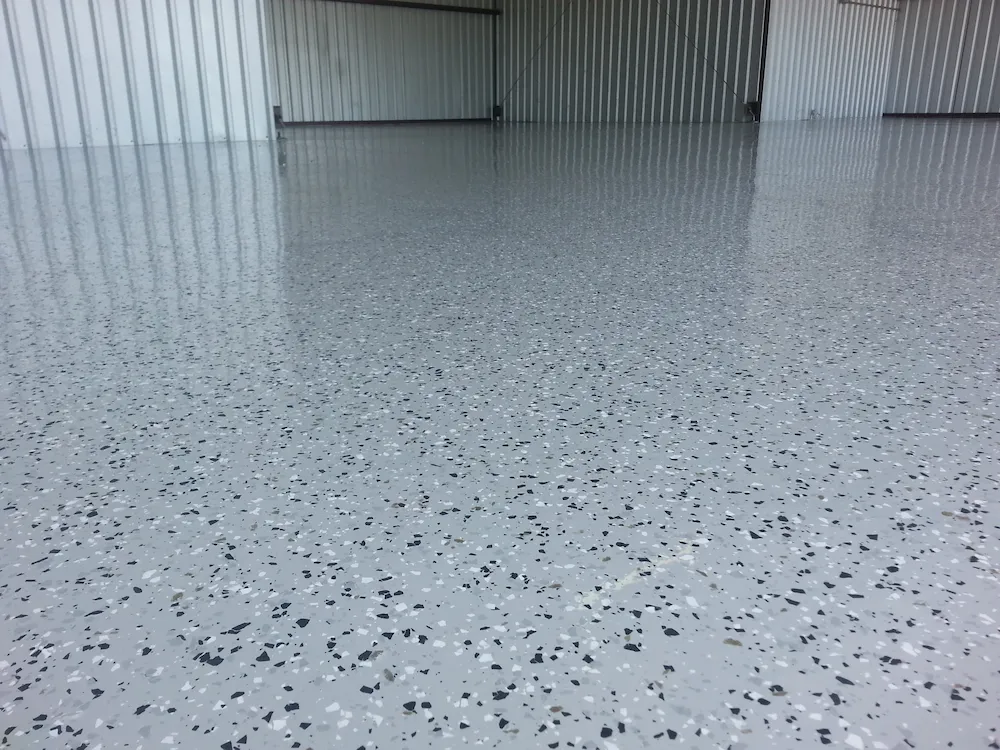
✔ Decorative Flake Epoxy – Includes color chips for a textured, slip-resistant surface.
✔ Metallic Epoxy – Premium high-gloss finish with a 3D marble-like effect, commonly used in luxury garages.
DIY vs. Professional Epoxy Garage Floors
🛠 DIY Epoxy Garage Floor Cost
✔ Material Cost: $2 – $5 per sq. ft.
✔ Best for small garages or basic finishes.
✔ Requires surface preparation (cleaning, grinding, patching cracks).
✔ Risk of improper application, bubbles, and peeling.
🏗 Professional Epoxy Garage Floor Cost
✔ Material + Labor Cost: $3 – $12 per sq. ft.
✔ Guarantees long-lasting adhesion and a flawless finish.
✔ Professionals use industrial-grade epoxy, proper grinding equipment, and curing techniques.
✔ Best for high-traffic garages, large spaces, and custom decorative designs.
Professional installation ensures better durability, making it the preferred option for homeowners who want long-term performance.
Is Epoxy Garage Flooring Worth It?
✅ Durable & Long-Lasting – Epoxy floors resist cracks, stains, and impacts.
✅ Enhances Aesthetics – Provides a sleek, polished, modern look.
✅ Easy to Maintain – Requires minimal cleaning and repels moisture and chemicals.
✅ Adds Home Value – Boosts garage appeal and resale potential.
A properly installed epoxy garage floor lasts 10-20 years, making it a highly cost-effective flooring solution.
Common Questions About Epoxy Garage Floors
How much does it cost to epoxy a 2-car garage?
For a standard 2-car garage (400 sq. ft.), professional installation costs $1,200 – $4,800, while DIY costs $800 – $2,000.
Is it worth putting epoxy on a garage floor?
Yes! Epoxy flooring is resistant to wear, stains, and moisture, making it one of the best investments for a garage.
Can I install epoxy over a damaged concrete floor?
How long does it take to install an epoxy garage floor?
Does epoxy flooring increase home resale value?
Is epoxy better than garage tiles?
What’s the cheapest way to epoxy a garage floor?
What is the disadvantage of epoxy flooring?
Can be slippery when wet (unless slip-resistant additives are used).
Requires proper concrete preparation to prevent peeling.
Takes several days to fully cure before it can handle heavy loads.
How long will an epoxy floor last?
A professionally installed epoxy floor lasts 10-20 years, while DIY installations typically last 3-5 years.
Final Thoughts: Should You Epoxy Your Garage Floor?
An epoxy garage floor is a smart investment for homeowners seeking durability, style, and protection. Whether you choose a DIY solution or hire professionals, epoxy flooring enhances garage functionality and curb appeal.
Looking to upgrade your garage floor? Get a free quote from epoxy flooring professionals today!