


Metallic Epoxy Flooring: What It Is and Where It Works
Metallic epoxy flooring gets attention for a reason — it’s one of the most visually striking floor finishes available, with a depth and movement that flat-color epoxy simply can’t produce. But it’s also more than a decorative gimmick. Understanding what it actually is and where it performs well will save you from either overpaying for the wrong space or underselling it in the right one.

Request a
Free Estimate
What Is Metallic Epoxy Flooring
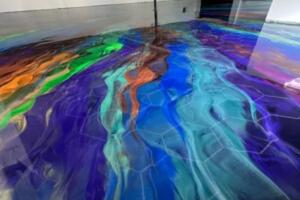
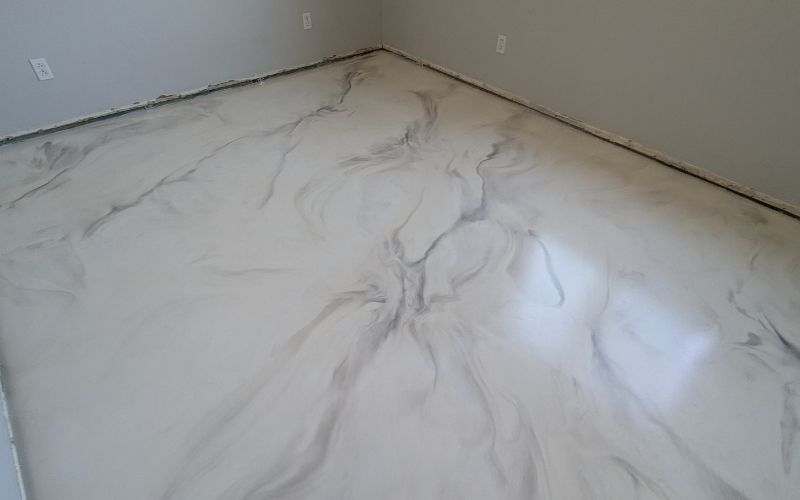
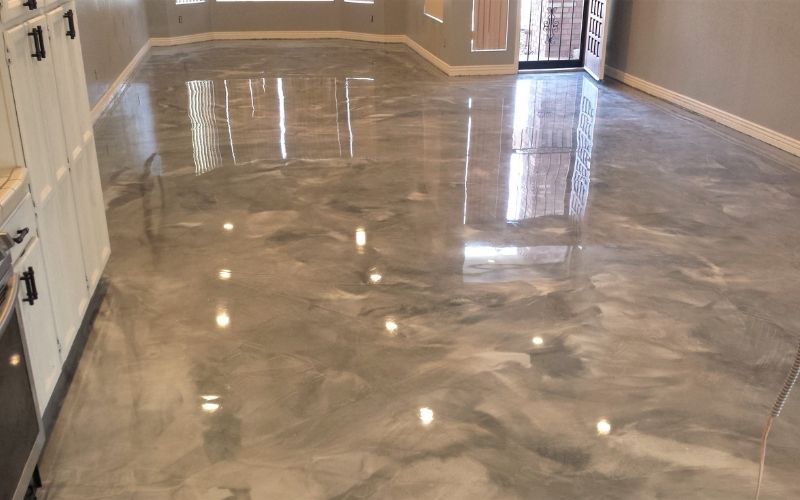
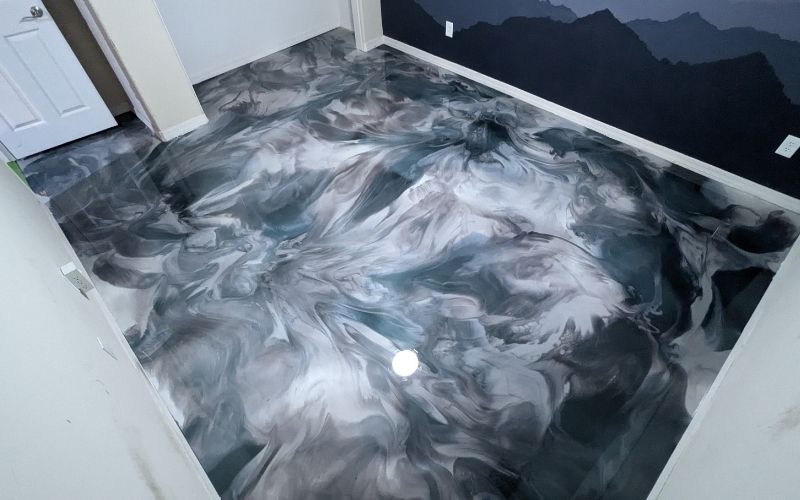
Metallic epoxy is a specialty epoxy coating that incorporates metallic pigments into the resin before or during application. As the epoxy cures, the installer manipulates the still-wet coating with tools, air, or specific application techniques to move the metallic pigments around, creating swirling, three-dimensional patterns that resemble flowing water, marble, or even lava depending on color choice and technique.
Unlike standard pigmented epoxy, which cures to a flat, uniform color, metallic epoxy’s pattern is created live during installation and is never exactly reproducible twice — every metallic epoxy floor is genuinely one of a kind.
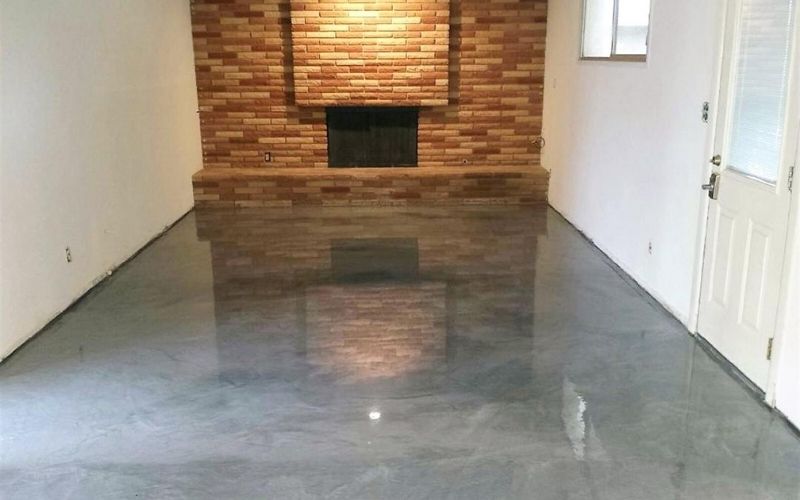
Where Metallic Epoxy Works Best
- Showrooms and retail spaces where the floor itself becomes part of the visual brand experience for customers.
- Restaurants, bars, and hospitality spaces looking for a high-end, unique look that sets the space apart from standard flooring.
- Residential garages and basements for homeowners who want their space to look distinctive, not just functional.
- Commercial lobbies and offices aiming for a premium, modern aesthetic without the cost or maintenance of natural stone.
- Auto showrooms and dealerships where a striking floor complements the vehicles on display.
Metallic Epoxy Finish Options and Effects
- Color combinations — most metallic floors use two or more complementary colors that blend and swirl together, though single-tone metallic finishes are also an option for a more subtle shimmer effect.
- Pattern intensity — installers can create anything from subtle, gentle movement to dramatic, high-contrast swirling depending on application technique and how aggressively the pigments are manipulated during cure.
- Gloss level — a high-gloss topcoat amplifies the three-dimensional, “wet look” effect that metallic epoxy is known for, while a satin finish tones it down for a more understated look.
- Added elements — some installations incorporate mica flake or other decorative additives alongside the metallic pigment for additional texture and sparkle.
Metallic Epoxy vs Standard Epoxy
What Affects Metallic Epoxy Cost
- Installer skill and experience — creating a well-balanced, visually appealing metallic pattern takes real technique, and experienced installers charge accordingly.
- Color complexity — multi-color blends with intricate patterns take more time and material than a simpler single-tone metallic finish.
- Surface prep requirements — like any epoxy system, metallic epoxy needs a properly prepared slab, and any repair work adds to the total project cost.
- Topcoat and gloss level — higher-gloss, more durable topcoats add cost but also extend the life and visual impact of the finish.
- Square footage — larger spaces benefit from some economy of scale, but metallic epoxy’s per-square-foot cost still typically runs higher than standard epoxy across any project size.
How the Installation Process Works
Is Metallic Epoxy Right for Your Space
FAQ